The Story
Why it exists.
The beginning
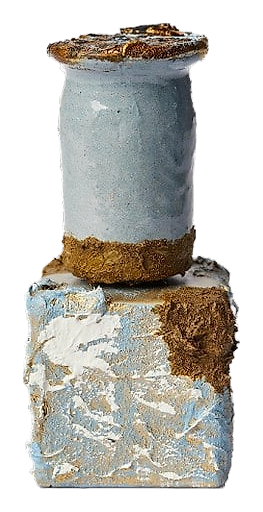
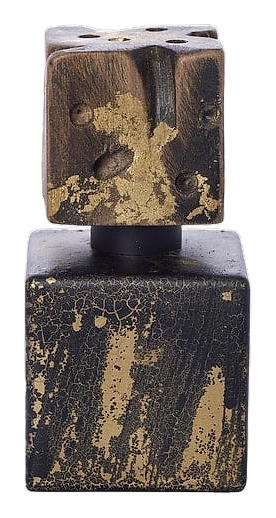
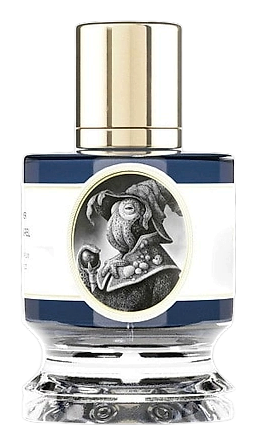
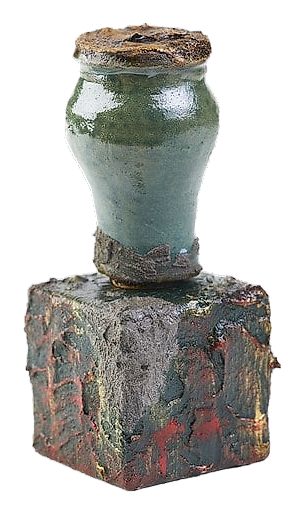
Mioritic was named by Adi Ale Van as the starting point for a fragrance that carries narrative weight. The name evokes pastoral traditions, and for this Green Edition, the fragrance shifts concentration from the original Mioritic, pushing the herbal and aromatic qualities forward with an immediacy that opens bright and green. The collaboration with potter Alina Iorga from Horezu, a town known for its centuries-old ceramic tradition, brought the bottle's form into the narrative. Each lid is hand-shaped from kiln-fired clay, referencing the ancient pitcher neck used by Romanian ancestors for thousands of years. The glass reproduces the relief forms and rivers of the Carpathian Danubian Pontic landscape. Twenty bottles exist.
The collaboration between Adi Ale Van and the Horezu potter Alina Iorga goes beyond aesthetics. The fired clay lids contain acrylic earth in their composition, a literal reference to the soil cherished by Romanian ancestors. The blue, gold, and brown palette on each bottle carries meaning: blue is water, brown is earth, gold is sunlight. These are deliberate visual choices that reinforce the fragrance's thematic core.
The evolution
The opening hits bright and immediate, basil and pink pepper arriving together, herbal and slightly spicy. The elemi adds a citrusy-resinous lift that keeps the top from feeling too agricultural. Thirty minutes in, the fig arrives. Not the sticky-sweet fig of summer fruit, this is fig wood, fig leaf, a green milky presence that changes the texture of everything around it. The incense doesn't announce itself so much as begin to layer underneath, creating a smoky-herbal tension that feels both pastoral and sacred. By the second hour, the drydown establishes itself. Patchouli and white musk create a warm, close-to-skin base that refuses to project loudly but refuses to disappear entirely. The woody notes hold everything together, giving the fragrance a structural coherence that lasts into the evening. On fabric, the drydown lingers overnight, a quiet trace by morning, the fig-patchouli combination proving more persistent than the opening suggested.
Cultural impact
Twenty bottles. That number alone tells you who this is for. Adi Ale Van operates in strictly limited series, and the hand-painted bottles with fired clay lids from Horezu are as much art objects as fragrance vessels. The house has built a following among collectors who value handmade imperfection as authenticity. Anne-Sophie Behaghel and Amélie Bourgeois have created something that sits outside seasonal conventions, but carrying a pastoral depth that reads differently in summer versus winter. The sweet-green character and the fig-incense pairing attract those who want fragrance that asks something of them rather than simply pleasing.