The Story
Why it exists.
The beginning
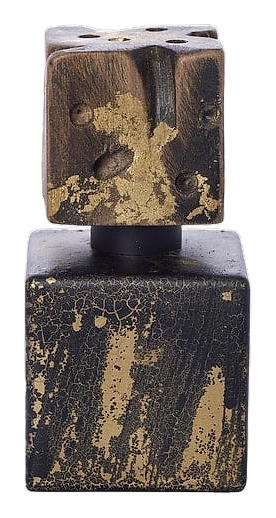
Dilema emerged from Adi Ale Van's atelier in 2021 as the house's most architecturally complex creation. The Romanian artisan house, founded by visual artist Adi Ale Van, treats each fragrance as a chapter in an ongoing body of work rather than a standalone product. Here, that chapter grapples with contradiction itself, the name suggests a problem without resolution, and the composition follows. Anne-Sophie Behaghel and Camille Chemardin built Dilema around a tension between luminous opening materials and a base that refuses to stay warm. Bergamot and saffron arrive sharp and immediate, creating an opening that commands attention before the wearer has time to settle into expectations. The perfumers then pivot hard into resinous territory, letting myrrh absolute anchor the heart while licorice introduces an unexpected sweetness that could easily go medicinal. This is the dilemma: sweetness that refuses comfort, warmth that keeps questioning itself.
What makes Dilema's structure noteworthy is how deliberately it resists the expected arc. Most leather-forward fragrances use their base as a destination, the journey leads somewhere warm and settled. Here, the black leather arrives as a disruption rather than a resolution, and the papyrus oil reinforces that sense of something ancient and slightly unsettling. Patchouli brings earthiness, yes, but the overall effect isn't grounded so much as suspended. The woody notes in the base are described as "modern" in official materials, which is accurate, there's nothing dusty or dated about how they function here. They're structural, holding the leather and papyrus in place without softening their edges.
The evolution
The opening hits within seconds, bergamot's citrus snap cutting through the saffron's bitter-spice, creating a brightness that feels almost pharmaceutical before it settles. For the first thirty minutes, this is a fragrance about heat: the sharp, dry heat of saffron on warm skin, barely softened by bergamot's fleeting presence. Then the myrrh arrives. Resinous and smoky, it doesn't replace the saffron so much as complicate it, adding a sticky sweetness that some wearers read as medicinal and others read as hypnotic. The licorice emerges here too, introducing a faint anise edge that polarizes opinion. By the second hour, the leather has taken over. Black leather, papyrus smoke, patchouli, they arrive together as a kind of chorus, and this is where the fragrance either captures you or loses you. The leather smells old and slightly animalic, not the polished accord of mainstream perfumery but something rawer. Papyrus adds a papery dryness that keeps the leather from becoming sweet. Patchouli provides the earthiness that anchors everything.
Cultural impact
Dilema occupies a specific corner of the niche fragrance world: leather-forward compositions with an unconventional sweet-spice heart. Community response places it alongside pieces like Nasomatto's Duro, though Dilema's inclusion of licorice and papyrus creates a different tension, drier, more papery, less purely animalic. The fragrance polarizes around that licorice heart: wearers either find it the most compelling part of the composition or the element that makes them set the bottle aside. For those who connect with it, Dilema becomes a signature fragrance, something worn repeatedly, in small amounts, on skin that wants complexity over comfort.