Wild lily
Wild lily brings a heady, green-floral intensity that cuts through compositions with remarkable presence. These undomesticated species offer bolder, more complex scent profiles than their cultivated cousins—spicy, honeyed, and distinctly green. Learn how perfumers capture their untamed character.
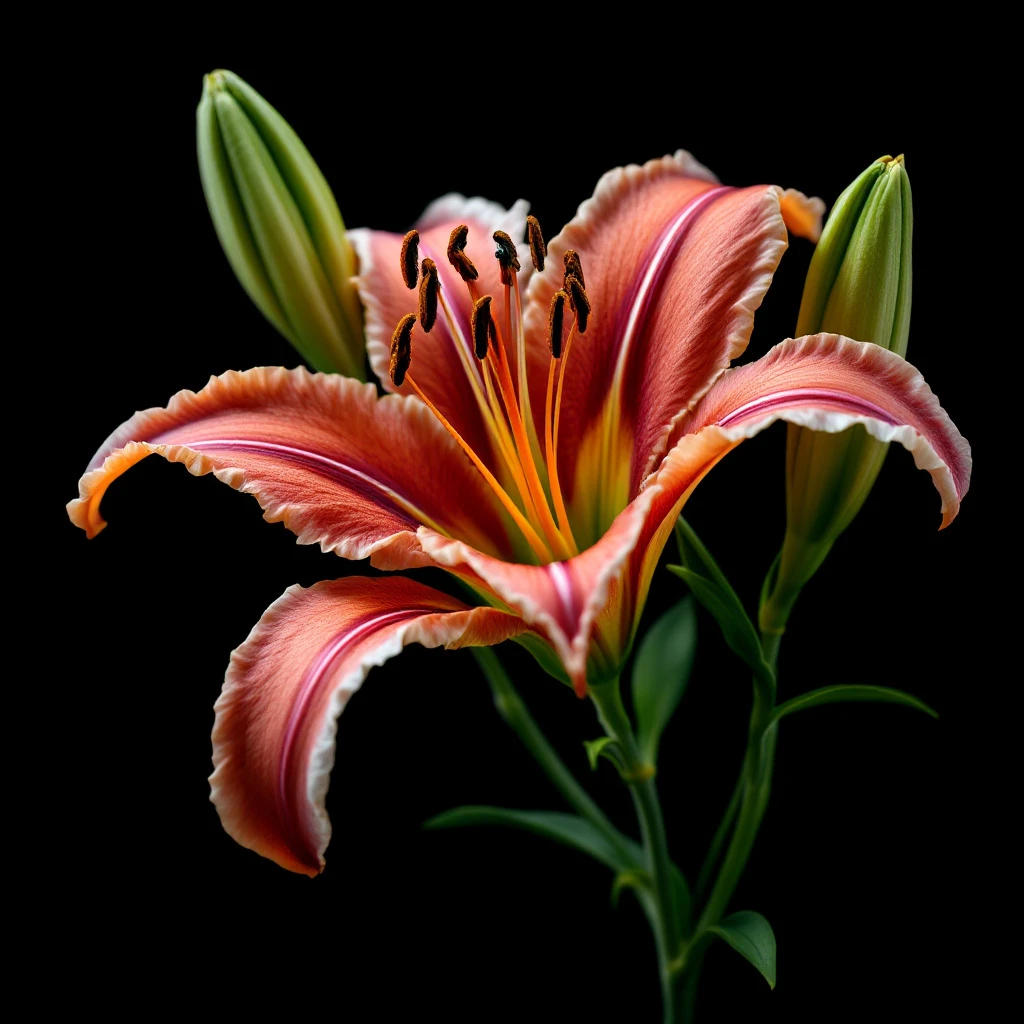
Character
How it smells
Untamed floral power with a green, spicy edge
It takes roughly 3.5 million fresh lily blooms to yield a single kilogram of absolute, making wild lily one of the rarest natural materials in perfumery.



Origin
China
Lilies have accompanied human civilization for over 3,500 years. The Madonna lily (Lilium candidum) appears in ancient Minoan frescoes and Mesopotamian cylinder seals, symbolizing purity across Greek, Roman, and early Christian traditions. Egyptian tomb paintings depict white water lilies in burial contexts.
Eastern cultures developed their own lily traditions: Lilium lancifolium (tiger lily) and Lilium brownii have featured in Chinese medicine and cuisine for centuries. The convergence occurred during Silk Road trade, when bulbous plants traveled between continents. European monastery gardens preserved Madonna lily cultivation through medieval centuries for both ornamental and medicinal uses.
By the 19th century, hybridizers began transforming wild species into the showy cultivars we recognize today, though perfumers increasingly turned to synthetic alternatives as natural extraction costs climbed.
Wears it best
Fragrances featuring Wild lily
Brands
Brands known for Wild lily
Good to know
Questions, answered
The essentials on Wild lily in perfumery: how it smells, where it comes from, and how it behaves on skin.
Is wild lily used as a natural ingredient in perfume?
Rarely. Natural wild lily absolute costs hundreds of euros per gram due to extreme flower-to-yield ratios. Most fragrances use synthetic lily accords built from materials like hydroxycitronellal, lilial, and cyclamen aldehyde to achieve the fresh, green-creamy character.
How does wild lily differ from cultivated lily in scent?
Wild species typically express stronger green-spicy top notes and more pronounced honeyed undertones. Cultivated lilies tend toward sweeter, heavier floralcy. The untamed character of wild lilies includes a crisp, dewy quality that cultivated varieties often lose.
What gives wild lily its characteristic smell?
The scent profile combines fresh green notes (cis-3-hexenol derivatives), creamy white-floral heart notes (from aromatic aldehydes), and subtle honey-spicy base notes. This complexity explains why perfumers struggle to replicate it fully with single molecules.
Can you extract lily scent through steam distillation?
No. Lily volatiles are too delicate and thermally unstable for steam distillation. Solvent extraction or advanced headspace analysis are the viable routes. This is why natural lily absolute commands such extreme prices when available.
Where do perfumers source wild lily materials?
China hosts the greatest diversity of wild Lilium species, with native populations across Yunnan, Sichuan, and Himalayan foothills. Conservation concerns exist around overharvesting of some wild populations for ornamental and traditional medicine use.
Does wild lily appear more in niche or mainstream fragrances?
Primarily niche. Luxury niche houses like Aftelier and some Serge Lutens releases list true lily absolutes or accord compositions attempting to capture wild lily's untamed character. Mainstream fragrances typically use synthetic recreations.
What other florals pair well with wild lily in compositions?
Wild lily works alongside hyacinth (green-floral synergy), rose (volume and warmth), iris (powdery sophistication), and green accords like galbanum. The combination with citrus top notes amplifies its dewy freshness.
Are there sustainability concerns with wild lily sourcing?
Some wild Lilium species face overharvesting pressure. The Convention on International Trade in Endangered Species (CITES) does not currently list most Lilium species, but habitat loss affects natural populations. Ethical perfumers specify cultivated or synthetically derived materials.





