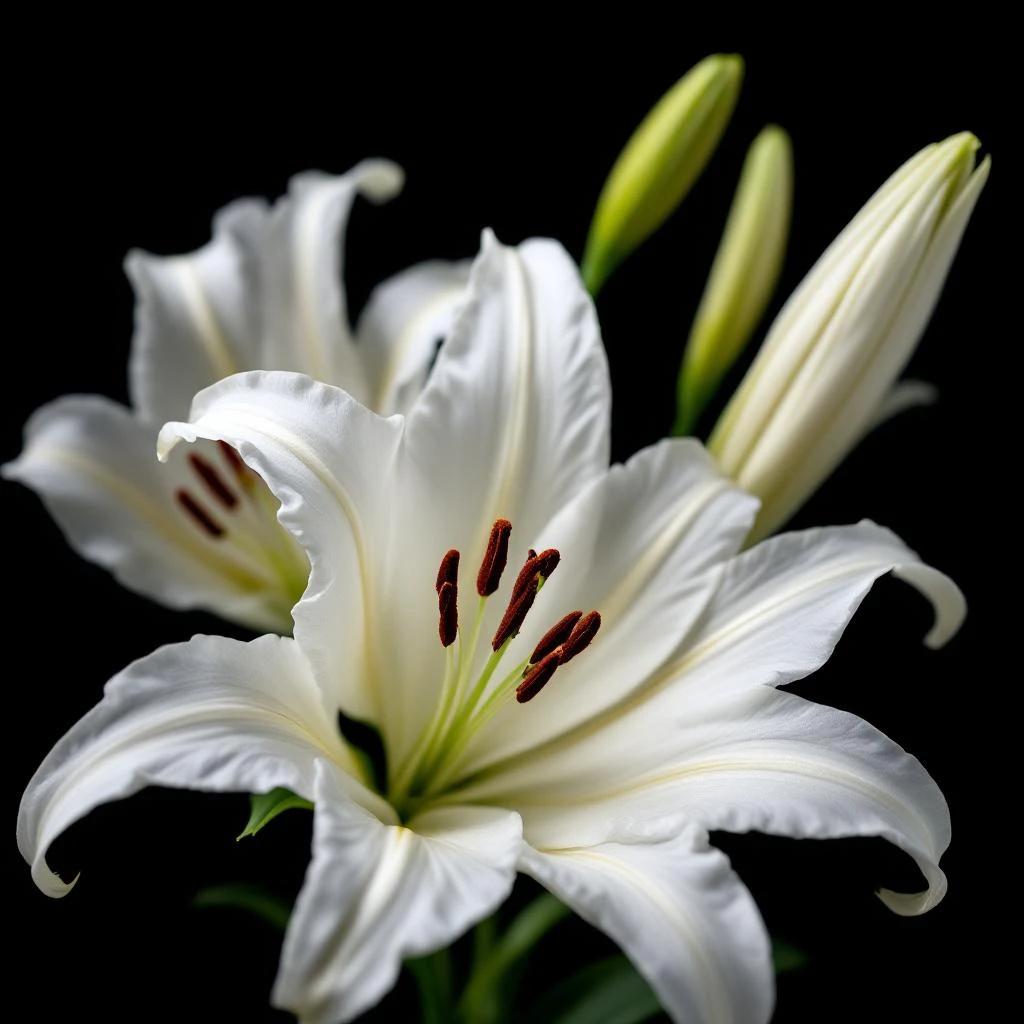
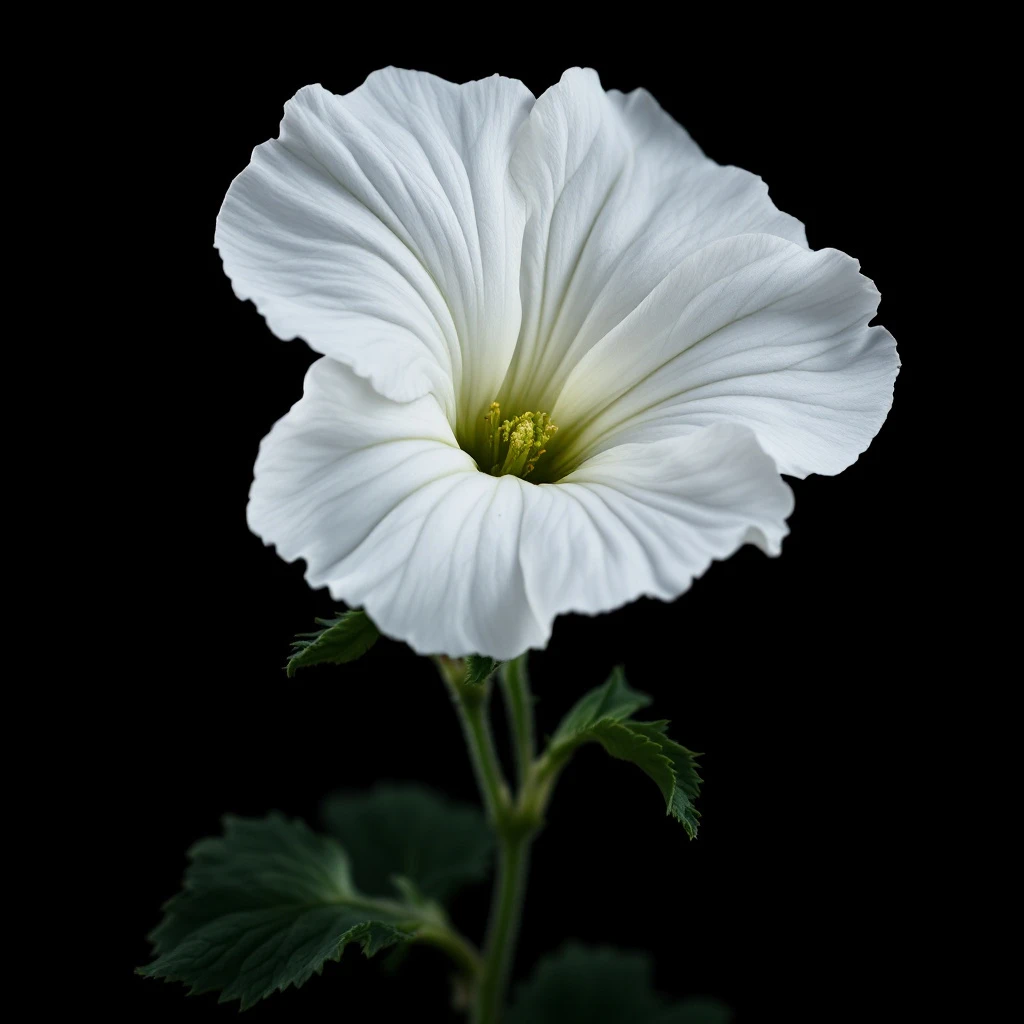
White Petunia
White petunia exists in perfumery as a constructed illusion. The flower yields no extractable oil, so perfumers build its scent from green, spicy, and floral aromachemicals.
Character
How it smells
A garden flower that never touched a still.
Petunia hybrida was first bred in 19th-century European gardens by crossing P. axillaris with P. integrifolia, yet no perfumer has ever distilled its blooms.


Origin
France
Petunia arrived in European horticulture in 1823 when French botanist Antoine Laurent de Jussieu described specimens collected from South America. The white-flowering P. axillaris contributed its pale, luminous blooms and evening fragrance to the hybrid lines that dominated Victorian bedding schemes.
By the late 1800s, petunias filled greenhouses and cottage gardens across England and France, yet their scent remained a horticultural curiosity rather than a perfumery target. The flower releases its fragrance primarily at dusk to attract hawkmoths, a pollination strategy that intrigued botanists but offered no path to extraction. When modern perfumers began constructing floral fantasies in the 20th century, white petunia joined gardenia, lily of the valley, and freesia as a note that exists only through chemistry.
Today it signals nocturnal freshness and garden nostalgia in fragrances that lean on imagination as much as raw material.
Wears it best
Fragrances featuring White Petunia
Brands
Brands known for White Petunia
Good to know
Questions, answered
The essentials on White Petunia in perfumery: how it smells, where it comes from, and how it behaves on skin.
What does white petunia smell like in perfume?
White petunia reads as a cool, green-white floral with dewy vegetal undertones and a faint peppery lift. Most compositions layer it with white floral bases and soft musks to evoke a moonlit garden rather than the flower's true odor profile.
Is white petunia a natural or synthetic fragrance note?
White petunia is entirely synthetic. The flower yields no extractable essential oil or absolute, so perfumers build the note from aroma chemicals designed to suggest its fresh, nocturnal character.
Why can't petunia flowers be extracted for perfume?
Petunia blooms produce negligible amounts of volatile oil. Steam distillation and solvent extraction both fail to capture enough material to be commercially viable, which is why the note remains a constructed accord.
When did white petunia enter perfumery?
White petunia entered fragrance composition in the 20th century alongside other fantasy florals like gardenia and freesia. Its appearance coincided with advances in synthetic aroma chemistry that made constructed floral notes practical.
Where does petunia originally come from?
Petunia originates in South America, where species like P. axillaris and P. integrifolia grow wild. French botanist Antoine Laurent de Jussieu described the genus in 1823 after specimens arrived in European collections.
Are white petunias actually fragrant?
Yes, though subtly. White-flowered petunias release their strongest scent at dusk to attract hawkmoth pollinators, producing a soft, sweet, slightly spicy aroma that fades by morning.
What ingredients replace natural petunia in a perfume formula?
Replacements typically include green leaf acetates, white floral compounds like methyl benzoate and benzyl acetate, and light spicy aldehydes. Together they approximate the flower's dewy, nocturnal impression.
Is white petunia a common note in mainstream fragrances?
White petunia appears occasionally in floral and garden-themed compositions but remains uncommon compared to jasmine, rose, or gardenia. Most uses lean toward artistic or niche fragrance houses exploring green-white floral concepts.