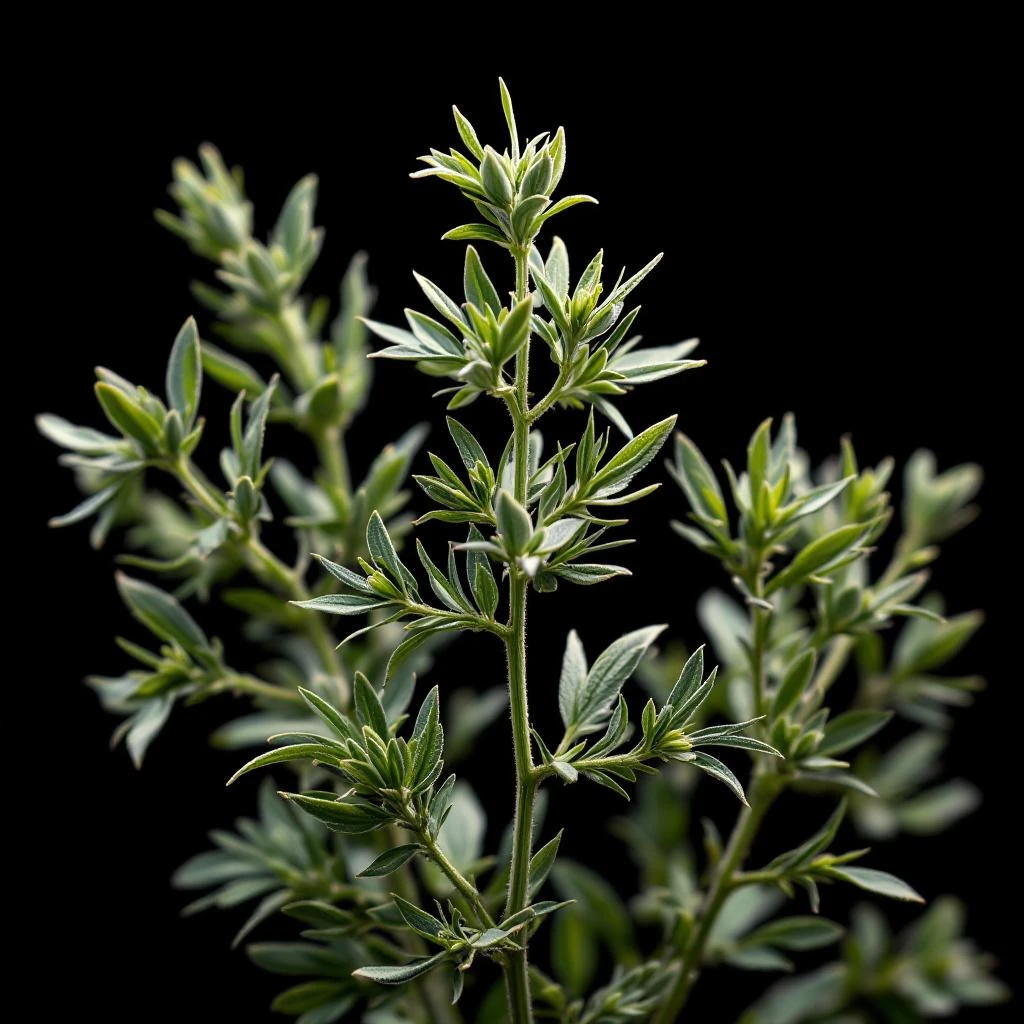
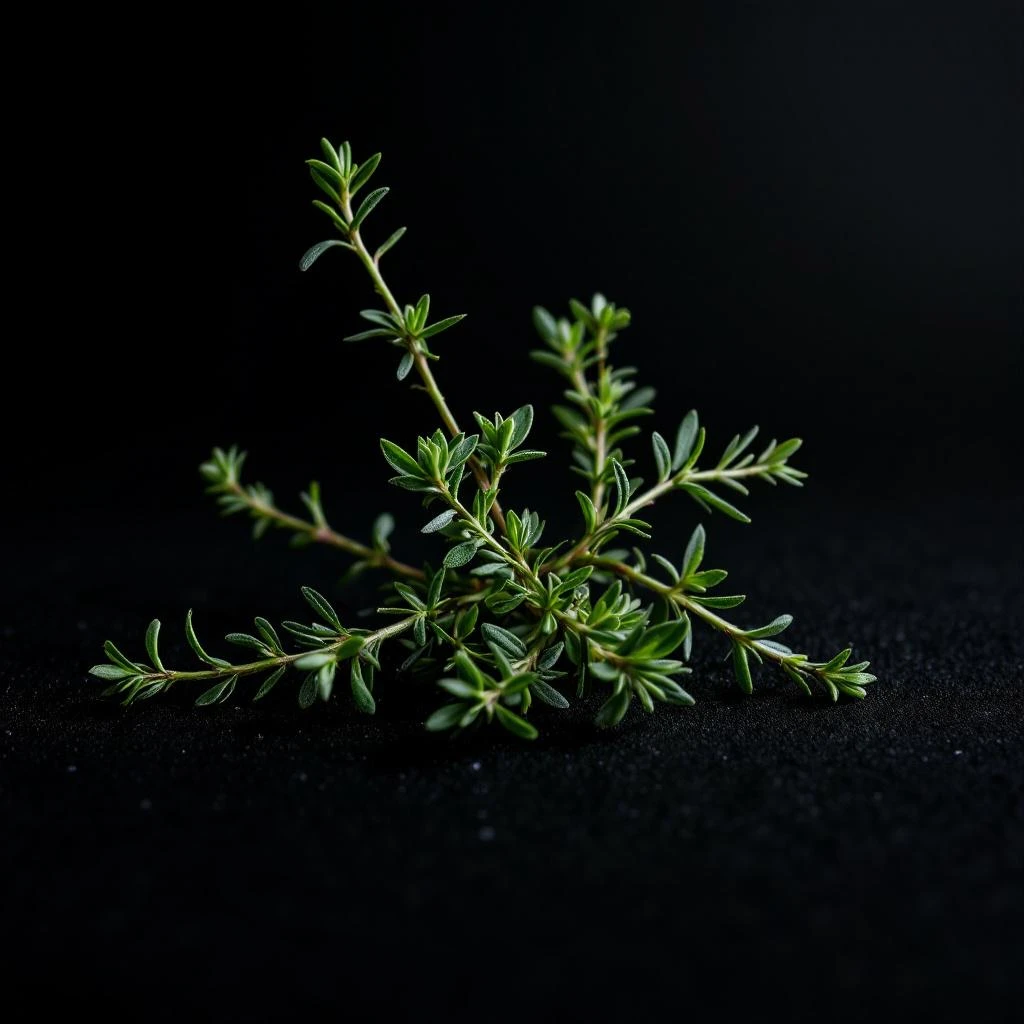
Rosemary Flower
Rosemary Flower opens with a crisp, camphorous herbal note, lifted by a delicate floral sweetness and the clean clarity of Mediterranean pine.
Character
How it smells
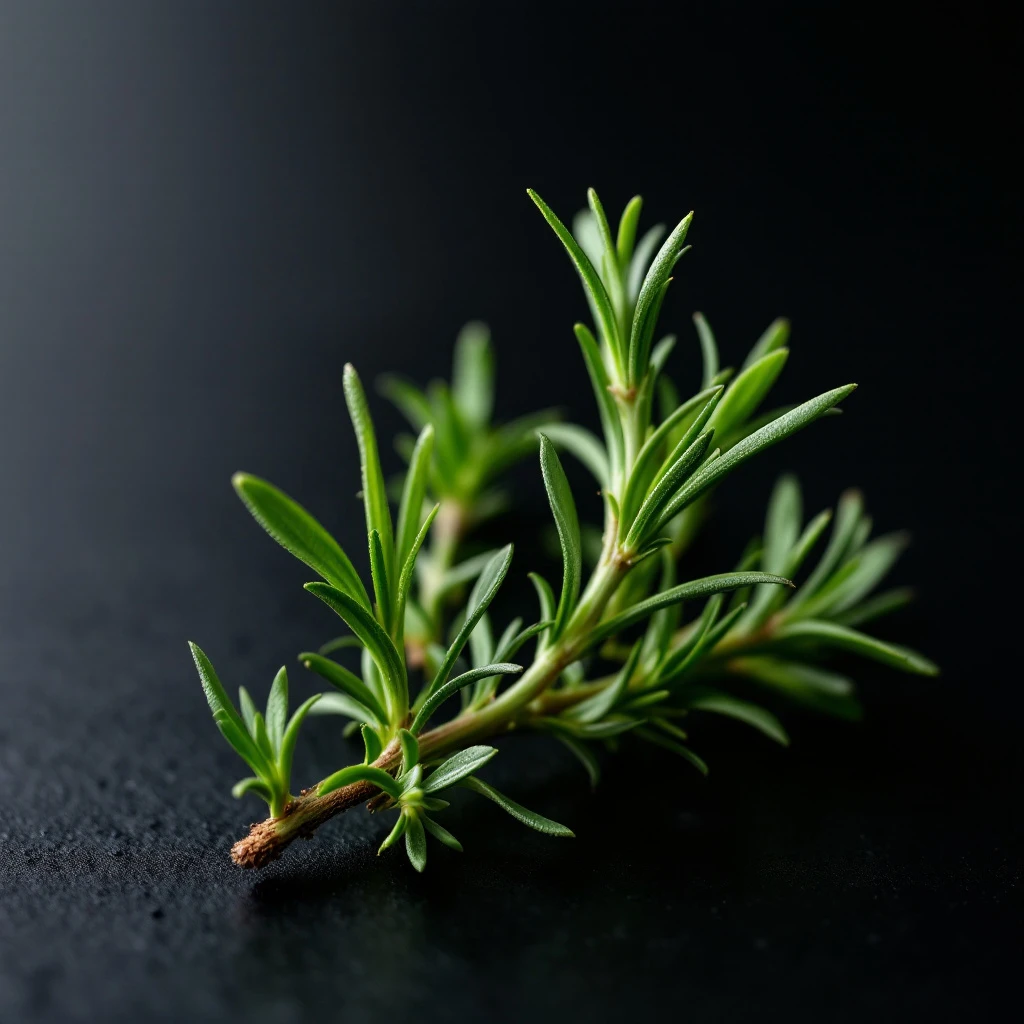
Mediterranean green, sharpened by a floral breeze.
Rosemary appears prominently in Guerlain's Jicky, introduced in 1889 as one of the landmark fragrances of modern perfumery.

Origin
Spain
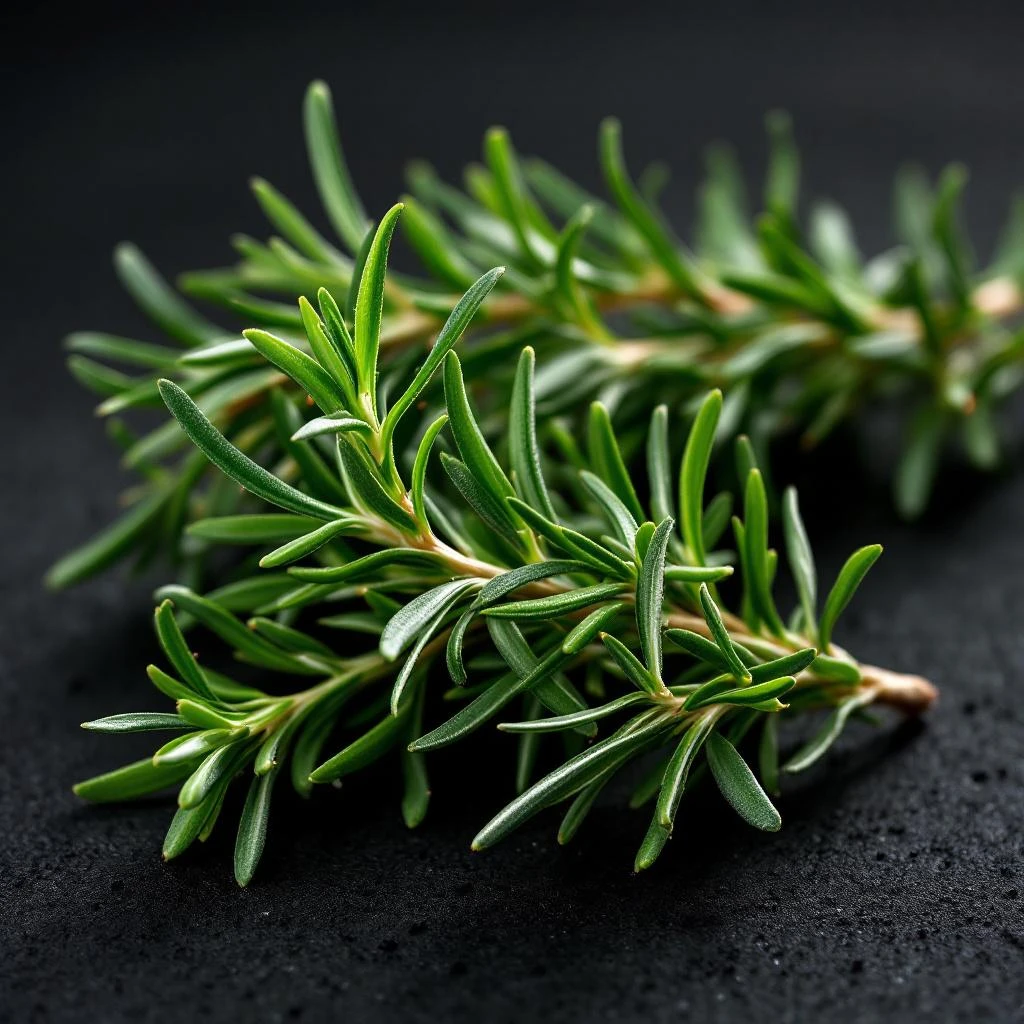
Rosemary is an evergreen shrub native to the Mediterranean, especially dry and rocky coastal areas. Its needle-like leaves have long served as a culinary herb, but the entire plant carries a strongly aromatic character. Early distilled rosemary oil appeared by the 15th century, making it one of the earlier aromatic plants processed into a concentrated fragrance ingredient.
Rosemary also held a place in European herbal and funerary customs; during the Medieval period, the French used it in the preparation of the dead for its fragrant properties. Its old Greek name, libanotis, means frankincense, reflecting the belief that rosemary smelled like that valued resin. By the late 19th century, rosemary had entered formal perfumery.
Guerlain's Jicky, introduced in 1889, used rosemary among its top notes, helping establish the herb as a structural fragrance material rather than a culinary scent alone. Today, the plant grows widely beyond its native range, though Mediterranean harvests remain closely associated with its classic aromatic profile.
Wears it best
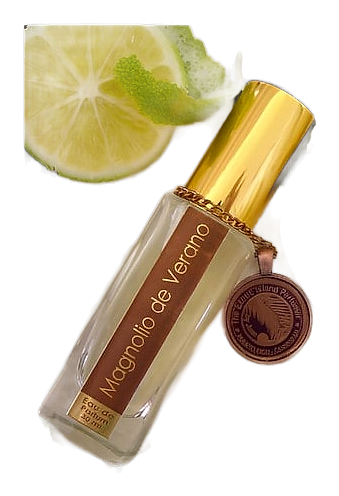
Fragrances featuring Rosemary Flower
Brands
Brands known for Rosemary Flower
Good to know
Questions, answered
The essentials on Rosemary Flower in perfumery: how it smells, where it comes from, and how it behaves on skin.
What does rosemary flower smell like in perfumery?
Rosemary flower gives perfumery a crisp, camphorous herbal scent with pine-like clarity and a light floral sweetness. It usually acts as a top or heart note, adding clean aromatic definition.
Where does rosemary flower oil come from?
Rosemary flower oil comes chiefly from rosemary grown in Mediterranean regions, with Spain among its major producers. The oil is usually distilled from flowering tops that include leaves and small stems.
How is rosemary flower oil extracted?
Producers most often use steam distillation. Steam passes through the flowering plant material, releases its volatile oils, and carries them into a condenser for separation.
Is rosemary the same note as rosemary leaf oil?
They share a familiar herbal character, but flowering-top oil can appear brighter and more floral than leaf-only oil. Chemical composition also changes with plant variety, harvest season, and growing conditions.
Which perfumes are known for using rosemary?
Guerlain's Jicky, introduced in 1889, is a notable example because rosemary forms part of its top-note structure. Its presence helped define the aromatic character of a landmark modern fragrance.
What fragrance families suit rosemary flower?
Rosemary flower works especially well in herbal, aromatic, citrus, and woody compositions. It also pairs naturally with lavender because both convey a distinct green, plant-derived character.
Is rosemary flower suitable for all skin types?
Rosemary oil can irritate sensitive skin when applied in concentrated form, and rosemary leaf oil has raised safety concerns for people with epilepsy or hormone-sensitive conditions. Diluted finished products and professional patch testing are advisable.
Does rosemary flower smell stronger than rosemary leaf?
Rosemary leaf often feels more concentrated, woody, and medicinal, while flowering tops can seem airier and subtly floral. The perceived difference depends on extraction method and the amount used in a formula.