The Story
Why it exists.
The beginning
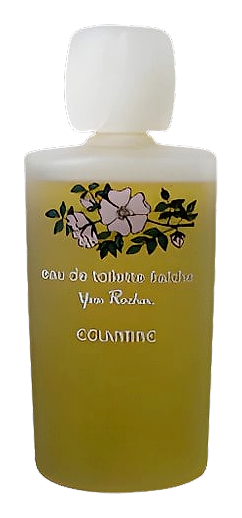
Eglantine takes its name from the wild rose, the eglantine, a species so old it predates cultivation entirely. It's the rose that grew before anyone decided what a rose should smell like, a botanical ancestor that carries the memory of hedgerows and untamed edges. Yves Rocher built this composition around that feral sweetness, letting the flower speak with the authority of something that has always existed outside human design. The brief seems to have been grace without ceremony, subtlety without disappearing. A fragrance that feels like the moment a rosebush catches morning sun before anyone else is awake, delicate but unmistakable in its presence.
What makes the structure interesting is its restraint. The opening, drawn from floral, green, and citrus families, reads almost like dew gathered on petals, light, transient, and quietly alive. Then the heart refuses to escalate. The eglantine itself holds the center, never overwhelming, never demanding the full stage. There's a confidence in that choice, a willingness to let one flower carry the composition without padding it with louder voices. The whole thing trusts flower and green to do the talking, and somehow that trust becomes the loudest element of all.
The evolution
The opening minutes belong to the green and citrus elements, a bright flicker that feels almost like crushed leaves between fingers. There's something alert in those first impressions, the olfactory equivalent of a quickened pulse before the flower settles into its true register. As the first half hour passes, the eglantine begins to assert itself, not as a wall of petals but as a slow accumulation, the way wild roses assert themselves along a fence line, present long before you consciously notice them. The floral note carries a faintly raw quality, green-edged rather than jammy or overripe, closer to a living plant than a bouquet left in water. By the second hour, the sharper opening elements have softened into the flower, and what remains is something almost abstract, a rose impression rather than a rose replica.
Cultural impact
Eglantine occupies a quiet corner of the fragrance world, the kind of composition people tend to discover through devotion rather than display. It wears like a personal detail, a rose soliflore suited to spring mornings and unhurried afternoons, the scent of someone who doesn't need to be the loudest thing in the room. The fragrance appeals to wearers who treat perfume as part of a private ritual, who choose bottles because they resonate rather than because they signal status. There's something almost generational about its appeal, a return to the idea that a single flower, handled with care, can carry an entire composition.