
The Story
Why it exists.
The beginning
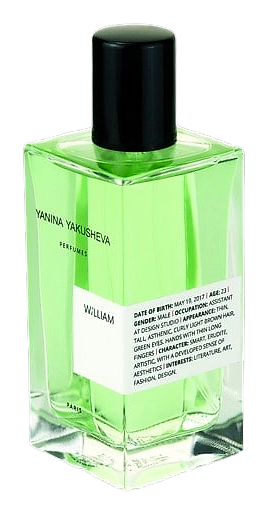
William arrived as part of a prolific 2017 debut collection from Yanina Yakusheva, six fragrances released simultaneously, suggesting a fully formed creative vision rather than a tentative first step into perfumery. The name suggests a person rather than a place or concept: specific, named, real in the way that private identities are real. Yanina Yakusheva, trained as a doctor in Krasnodar before moving her practice to Sofia, built her perfumery brand on the belief that scent should reveal character rather than cover it. William fits that philosophy perfectly, a fragrance with enough edges to feel like a choice, not a default.
The combination of vermouth and green tea in the heart is unusual territory for niche perfumery. Vermouth, the fortified wine aromatized with wormwood, herbs, and spices, sits at the intersection of bitter and aromatic, a spirit that was designed to be sipped as an aperitif before meals to stimulate appetite. Here it appears not as a flavor reference but as an olfactory idea: that slightly medicinal, botanical bitterness that signals sophistication and restraint. Green tea amplifies this effect, adding a clean, slightly astringent quality that prevents the composition from becoming heavy. Together, these materials create a heart that smells like knowledge and moderation rather than indulgence.
The evolution
The opening announces itself with bright green intensity, bergamot and tarragon arriving together, the tarragon pushing harder, more aromatic, more assertive. Within fifteen minutes, the tulip emerges, softening the sharpness without eliminating it. The hand-off between top and heart happens around the thirty-minute mark, when vermouth and green tea take over, the vermouth lending a subtle bitter complexity that most green fragrances avoid entirely. Cedar and patchouli arrive in the drydown around the two-hour mark, grounding everything in warm wood while oakmoss and ambergris pull the composition toward earth and sea, ambergris adding a faintly animalic warmth that most modern fragrances scrub out in favor of cleanliness. By hour five, you're left with a soft moss-and-amber foundation that smells like skin, not perfume. By hour six, it's intimate and close, the kind of scent you only notice when you're close enough to breathe.
Cultural impact
William sits in an interesting space within the niche fragrance landscape, not as aggressively experimental as some artisan releases, but more characterful than most mass-market options. The vermouth-green tea combination places it firmly in the botanical-aromatic tradition, though the oakmoss and ambergris drydown pushes it toward the older, chypre-influenced style that dominated perfumery before IFRA restrictions limited mossy materials. For wearers who remember that era or seek its character, William offers something increasingly rare: a fragrance that's green without being aquatic, herbal without being medicinal, and warm without being sweet.