The Story
Why it exists.
The beginning
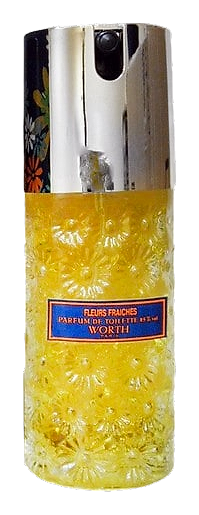
The House of Worth, rooted in the Parisian couture tradition, has long been associated with a particular kind of luxury where every detail, from the cut of a sleeve to the choice of a trimming, is considered with an almost architectural precision. The perfume division of the house extends that same philosophy into fragrance, creating scents designed to feel like the olfactory equivalent of a Worth gown: meticulously tailored, classically French, and unapologetically feminine. Each composition in the line is treated as an accessory to a complete aesthetic, meant to be worn close to the skin rather than announced across a room. Fleurs Fraîches was born into this tradition, carrying the floral vocabulary that the house had already made its own.
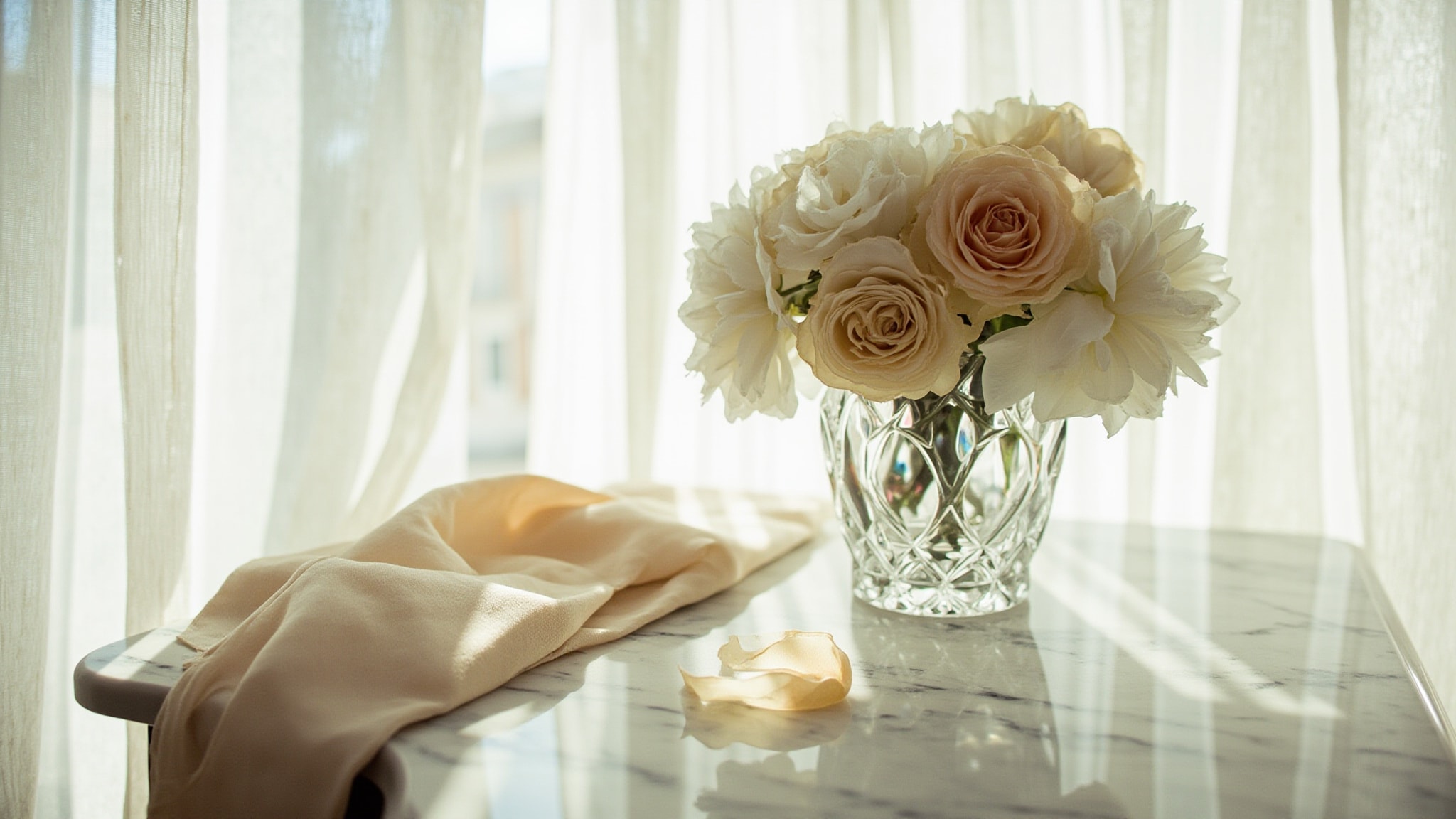
Fleurs Fraîches, true to its name, was designed around the idea of a just-arranged bouquet at the peak of its bloom, when the stems have taken on a faint warmth, the water in the vase is still cool, and the air around the arrangement holds a soft, almost humming sweetness. The brief was deceptively simple: capture the scent of flowers as they are actually experienced in a room, layered together, slightly crowded, alive with a green vitality that no single stem could provide on its own.
The evolution
Over the decades, Fleurs Fraîches has moved in and out of availability several times, reflecting the shifting fortunes of the Worth brand itself. Through every revision the core idea has remained remarkably consistent: a soft, fresh floral that smells like flowers in a vase, not flowers in a field. The modern interpretation leans toward a lighter, more transparent reading of the white floral heart, with a sheer musky base that extends the wear without weighing the composition down. The current bottle, bearing a René Lalique design, presents the juice in a piece of glass that feels less like packaging and more like a small objet d'art, the kind of vessel that rewards keeping long after the last drop has been used.
Cultural impact
Fleurs Fraîches occupies a particular place in the history of French perfumery, sitting alongside those soft, naturalistic florals that have become quietly essential to the vocabulary of the genre. The composition reads as an accessory in the truest sense, a finishing touch to a well-dressed life rather than a statement meant to announce itself across a crowded room. Its enduring appeal lies in a kind of French restraint, the willingness to let the materials speak for themselves without orchestrating them into something louder than they need to be.