
The Story
Why it exists.
The beginning
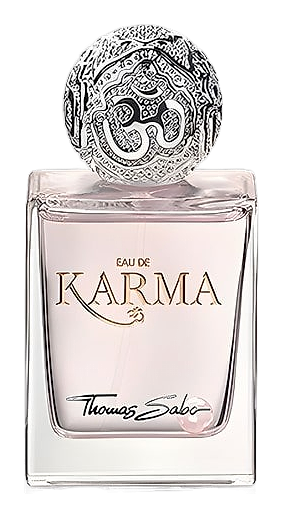
Thomas Sabo built an empire on small things. Charms. Accumulated moments. Personal adornment worn close. The Charm Club collection became its signature, collectible pieces that told individual stories. Eau de Karma arrived in 2015 as the scent equivalent of that philosophy. Not a grand statement. A quiet one. The kind of fragrance that marks a moment without demanding everyone notice it.
What makes this composition work is restraint. The ozonic top reads as something atmospheric, an impression of open air rather than a synthetic construct. Blackcurrant and apple give it fruit without sweetness overload. The heart of lotus, peony, and rose is soft, traditional, and safe. The base of cedar, musk, and amber keeps it grounded without heaviness. It's a composition that trusts the wearer to bring their own meaning. The pink quartz stone in the bottle is the brand's way of saying this scent is meant to open something, believed to represent love and boost confidence.
The evolution
The opening hits immediately, ozonic brightness with blackcurrant tartness and apple's crisp sweetness. Freesia adds a clean floral edge that feels almost aquatic. As time passes, the fruit softens as peony and rose emerge, but the ozonic lift never fully disappears. It's the tell. That's what separates this from a standard fruity-floral. The heart holds steady and approachable. The cedar and musk arrive next, warm, clean, slightly woody. Amber adds body without sweetness. The drydown is gentle. Not a dramatic reveal. Just warmth fading into skin. The sillage is intimate. You'll smell it.
Cultural impact
Eau de Karma is accessible and optimistic, designed for someone building a scent wardrobe rather than hunting rarities. Thomas Sabo's jewelry DNA shows in the approachability: this is personal adornment, not performance art. The Charm Club philosophy translates literally, extending the brand's identity into a new medium. It's about harmony and balance, treating scent as something you collect and layer rather than a singular statement piece.