The Story
Why it exists.
The beginning
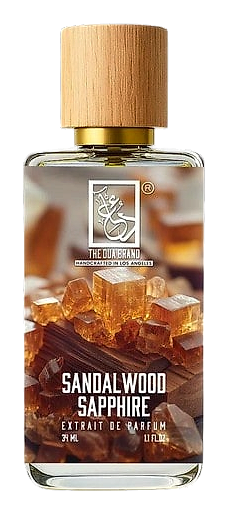
Sandalwood Sapphire carries the sapphire reference in its name, a quiet gesture toward the precious and the polished, while the composition bends deliberately away from overt oud dominance. What emerges is something warmer and more grounded: less gem-case formality, more fireplace-and-incense atmosphere. The oud still appears in the note list, but it no longer drives the structure. Instead, sandalwood and leather carry the weight, anchoring a composition that values texture over spectacle. It's a translation between two dialects of the same language, one that prizes the architecture of a regal composition while restating its vocabulary in creamier, more wood-forward terms.
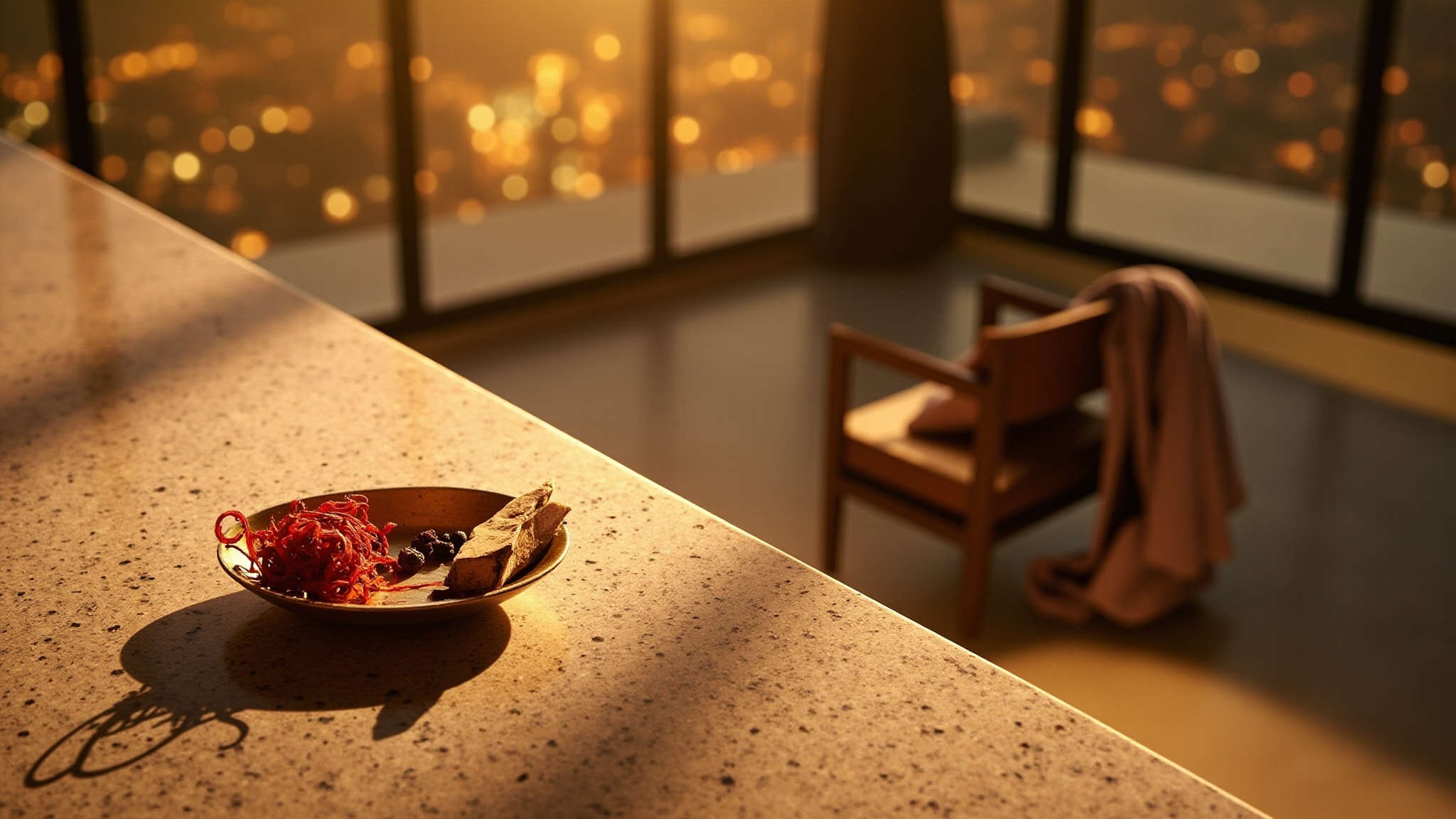
What makes this composition worth slowing down for is the layered arrangement of ambrette, saffron, and black pepper across the top, three materials working in close conversation rather than taking solo turns. The combination reads warm and seasoned, with each spice offering its own register of heat and texture. The interplay feels studied, like a carefully measured trio rather than a chaotic collision of notes.
The evolution
The first thirty minutes belong to the spice. Ambrette, saffron, and black pepper arrive together in a wave that reads warm, almost food-adjacent, then pulls back into something drier and more mineral as the leather surfaces. By the one-hour mark, the leather has settled into its permanent position, smoky and close to the skin, while osmanthus adds a fruit-skin warmth that wasn't apparent at the start. The oud sits quiet in the mid-phase, more suggestion than statement, a shadow rather than a main character. Past the three-hour mark, the sandalwood and orris take over. What started as a sharp, spiced leather piece becomes something creamier and more contemplative, almost powdery in the drydown. Styrax hangs in there until the end, lending a resinous sweetness that keeps the whole thing from going too soft.
Cultural impact
Sandalwood Sapphire entered the fragrance conversation as part of The Dua Brand's Inspired Expression collection, sitting within a catalog that includes compositions noted for their sandalwood-forward architecture. The fragrance itself lists oud in its composition but centers the experience on sandalwood, leather, and a range of supporting materials that pull the overall impression toward warmth and wood. As a sandalwood-dominant composition, it belongs to a category that has seen renewed interest from buyers looking for creamy, woody profiles, the kind of warmth that feels grounding rather than resinous.
The House
The Dua BrandThe Dua Brand emerged in 2016 as a niche fragrance house that focuses on recreating the scent profiles of high‑end perfumes at a more approachable price point. Based in Los Angeles with a satellite operation in Dubai, the company blends traditional hand‑crafting techniques with modern analytical tools to deliver a catalog that spans woody, floral, gourmand and oriental families. Its releases, such as Italian Decorum (2017) and Boss Lady! (2023), have earned a steady following among scent enthusiasts who value both familiarity and originality.
The Creator
Mahsam RazaThe Dua Brand's offerings reflect Mahsam's Dubai upbringing: bold oriental constructions, rich sillage, and a preference for ingredients that announce presence without apology. His formulations tend toward depth and longevity, often featuring amber, oud, and woody bases.