The Story
Why it exists.
The beginning
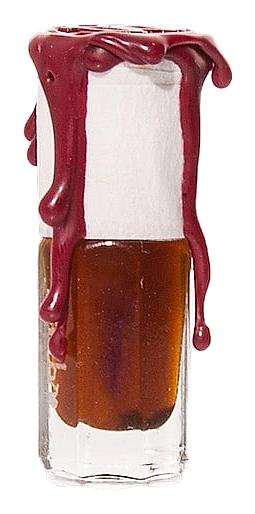
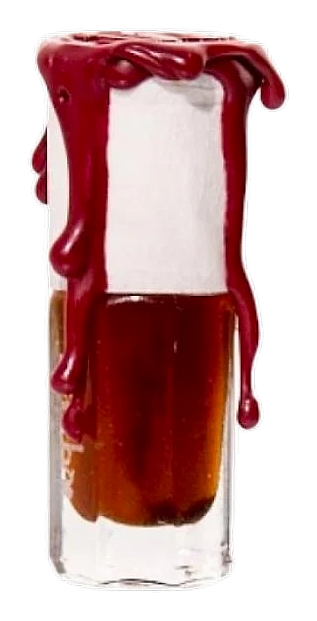
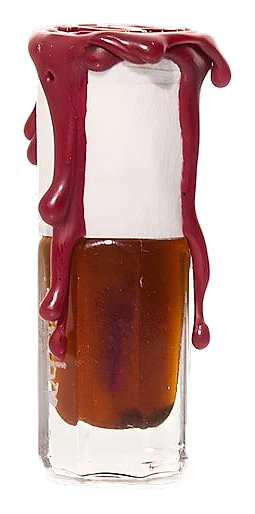
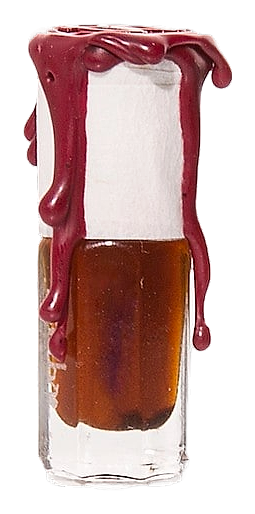
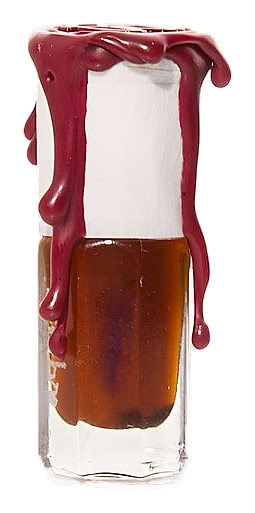
Dewaniya arrived in 2017 as the fifth original attar from Sultan Pasha's London atelier, following Cuir au Miel, Encens Chypre, and Tabac Grande. The name comes from the Arabic dewaniya, a reception hall where guests are welcomed without restraint, where hospitality means abundance. Sultan Pasha built the fragrance around that idea: a scent that doesn't ration its pleasures. The composition layers absinthe, saffron, rose, and incense against several ouds and animalic base materials, creating a density that mirrors the concept of generous, almost excessive welcome. For a house rooted in the idea of fragrance as a private, considered ritual, Dewaniya represents a particular kind of confidence, the willingness to give more than is strictly necessary.
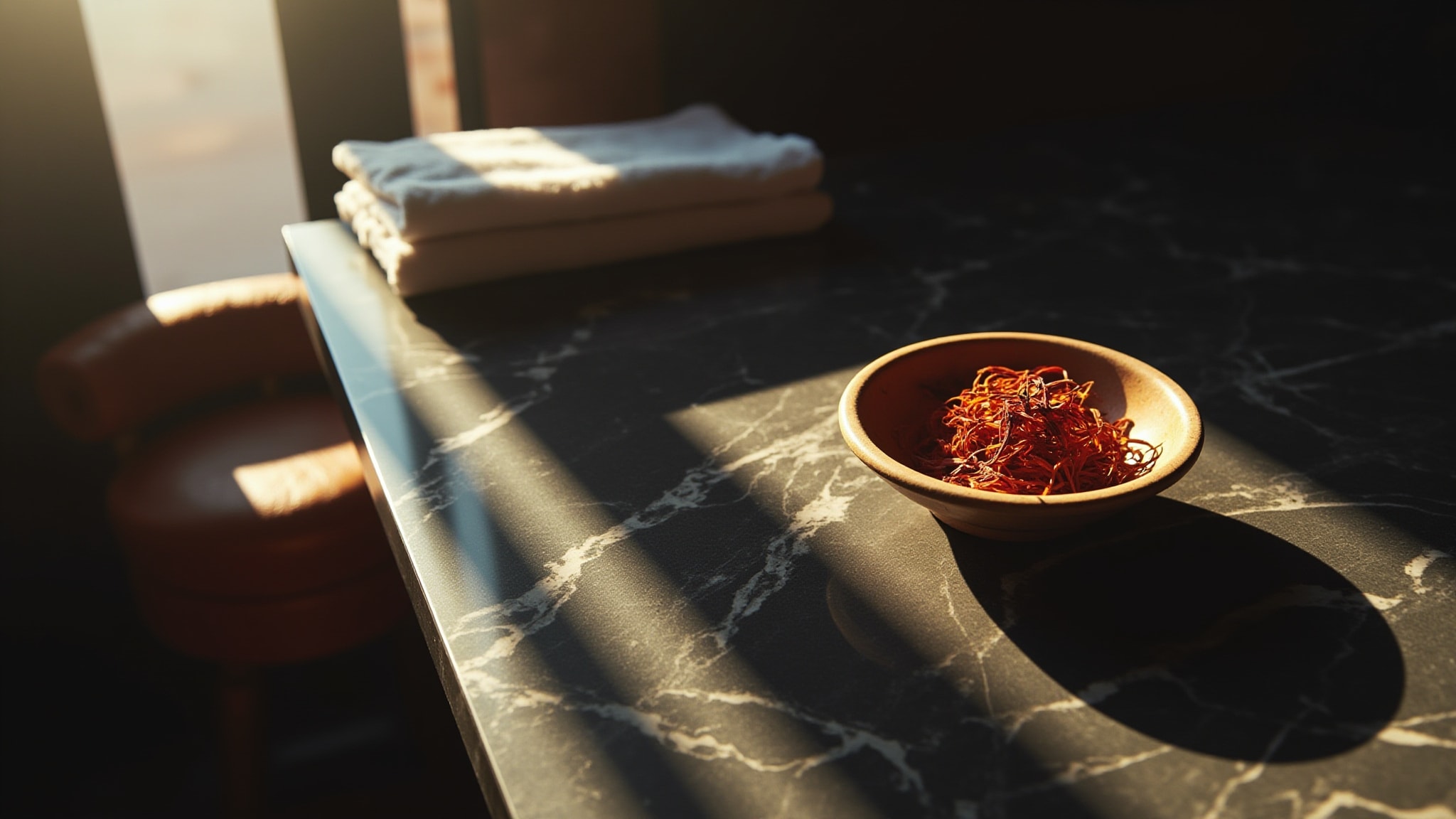
What makes Dewaniya's structure unusual is the dual presence of absinthe and honey. Absinthe brings thujone, a sharp, bitter, green note that most perfumers treat as an accent, a flash of medicinal intensity. Here it doesn't disappear into the background. Instead, softened by saffron's honeyed warmth and held by marigold's green-botanical weight, absinthe becomes part of the richness rather than a interruption of it. The base builds from multiple ouds, myrrh, and a suite of animalic materials, castoreum, civet, white ambergris, that create a dense, warm foundation. This isn't a fragrance that opens and closes. It accumulates.
The evolution
Dewaniya opens with immediate intensity. Saffron announces itself with its signature metallic-honey warmth, while marigold's green-herbal weight keeps the brightness grounded. Absinthe arrives with a flash of bitter-green sharpness that some find arresting, this phase lasts roughly 30 minutes before the edges soften and the heart opens. The middle phase is where the floriental character fully emerges: rose and jasmine bloom over a dark, honeyed tobacco and Cambodian oud, with coffee absolute and black tea bringing a bitter, aromatic counterpoint. Cocoa and osmanthus deepen the warmth. This phase holds for several hours, four to six on most skin types, longer on fabric. The drydown shifts the composition toward its base: tobacco returns, myrrh and labdanum build warm resin, and the animalic materials, castoreum, civet, white ambergris, emerge as a furry, intimate warmth that settles close. Sandalwood, cedar, and cade oil add smoky-woody depth. The final hours belong to amber, benzoin, and tonka bean: sweet, balsamic, and lingering.
Cultural impact
Dewaniya occupies a particular corner of the niche fragrance world: the kind of composition that serious collectors seek out precisely because it refuses to be polite. Its generous use of animalic materials and natural raw materials places it in the company of attars and oils that prioritize depth and complexity over mainstream appeal. The fragrance has built a following among those who appreciate natural compositions with genuine character, the kind of scent that announces a point of view rather than a demographic. In a market where 'unisex' often means 'inoffensive to everyone,' Dewaniya is genuinely unisex in the older sense: it belongs to the wearer, not to a category.