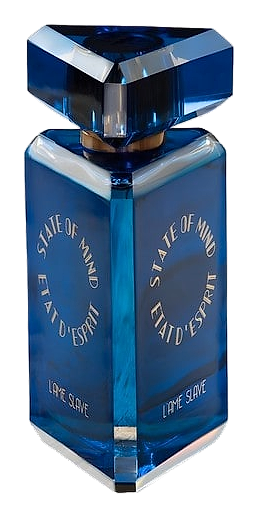

The Story
Why it exists.
The beginning
L'Ame Slave translates to 'The Slavic Soul', a deliberate choice by perfumer Karine Dubreuil-Sereni to capture something specific. Not the romantic Slavic cliché of winter palaces and ballet, but the real thing: birch forests in early morning, the smell of strong tea brewed in ceramic cups, the particular silence after snow falls. This fragrance was built around an unusual material: Pu-erh tea, a fermented Chinese tea with notes of earth, smoke, and something almost medicinal. It's a scent that rewards presence rather than performance, that finds its beauty in the austere rather than the decorative.
What makes L'Ame Slave unusual isn't any single note, it's the architecture. The opening (bergamot, lemon, lilac) is Western, clean, immediately likeable. But it's a decoy. Soon the honey and ginger arrive, and the structure shifts from polite to personal. By the time the Pu-erh tea and birch appear, the fragrance has stopped trying to please and started trying to mean something. Cedar and sandalwood keep it grounded without becoming heavy. The result is a fragrance that goes from greeting to confession.
The evolution
The opening is citrus-forward without sharpness, bergamot paired with a soft lilac lift that makes it read as fresh rather than aggressive. The lemon is there but doesn't dominate. As time passes, honey thickens into the composition. Ginger adds a faint heat that elevates the sweetness just enough to keep it from feeling girlish. Vanilla arrives quietly, settling in as a bridge to the base notes. The Pu-erh tea announces itself with a fermented, slightly smoky quality that feels unexpectedly austere. Birch adds a green, slightly medicinal character that partners with the tea beautifully. The drydown, cedar and sandalwood, keeps everything linear and calm, with the tea note lingering longest while honey and vanilla dissolve first. On fabric, the fragrance can persist well into the next wearing.
Cultural impact
L'Ame Slave occupies an unusual space in niche perfumery: neither aggressively avant-garde nor safely mainstream. The Pu-erh tea note has drawn attention from those who've encountered it, a rare material that makes the fragrance memorable against more predictable structures. For those who know the smell of strong black tea, birch forests in winter, the particular silence after snow falls, this fragrance triggers something specific and hard to articulate. It's not trying to be universal. It's trying to be true.