
The Story
Why it exists.
The beginning
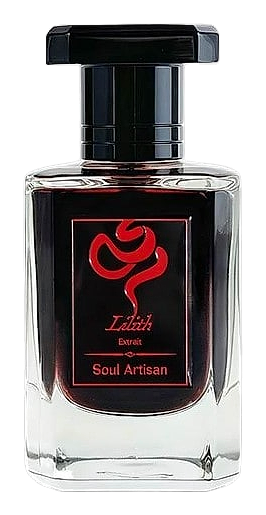
Lilith takes its name from the mythological figure traditionally remembered as Adam’s first companion, a being who refuses submission and leaves Eden. Soul Artisan places that story in a different light, shifting the emphasis toward self-determination and resistance to imposed norms. The result is not a soft portrait of myth, but a fragrance built around refusal, sharp edges, and the idea of choosing your own ground. Its composition begins with a cold, reflective flash of aldehydes, blood, birch tar, castoreum, and civet before settling into jasmine, ylang-ylang, leather, cinnamon, vetiver, orris root, and metallic notes. Oakmoss, labdanum, and cedarwood give the fragrance a cool, resinous, and dry woody foundation.
The composition makes that refusal physical. Aldehydes and a blood accord create a metallic, almost mineral first impression, while birch tar brings the dry snap of smoke. Castoreum and civet push the composition toward animal territory, not as decoration, but as a deliberate challenge to the idea that fragrance must always be polite. The heart softens without becoming tame. Jasmine and ylang-ylang add floral heat, leather supplies structure, and vetiver keeps the result rooted. Orris root gives the center a powdery, cool edge beneath cinnamon and metallic notes.
The evolution
Lilith begins with a cold, reflective flash. Aldehydes, blood, birch tar, castoreum, and civet make the first impression feel almost alive, metallic and animalic at once. As the opening settles, jasmine and ylang-ylang bring a fuller floral warmth, while leather, cinnamon, vetiver, orris root, and metallic notes turn the composition inward. It becomes less like a bright entrance and more like a quiet decision. The base is the part that stays with you: oakmoss lays down a cool forest floor, labdanum adds resinous heat, and cedarwood gives the finish a dry, woody spine. The contrasts remain clear throughout the composition, from the reflective opening notes to the darker floral heart and the earthy, textured base.
Cultural impact
Lilith sits within Soul Artisan’s stated interest in scent as cultural language, using mythology as a point of entry rather than treating the figure as a fixed symbol. Its self-determined reading of Lilith gives the name a contemporary charge, while the dark animalic, metallic, and leathery direction places it within a less ornamental register of niche fragrance. The composition’s contrasts give that reading a sensory form, beginning with a cold flash of aldehydes, blood, birch tar, castoreum, and civet before opening into jasmine, ylang-ylang, leather, cinnamon, vetiver, orris root, and metallic notes.