The Story
Why it exists.
The beginning
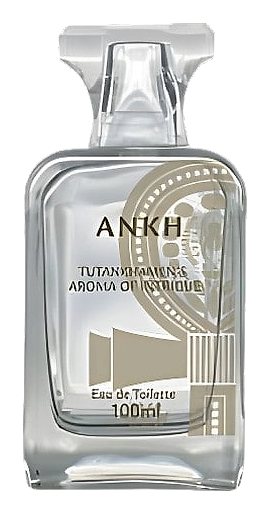
Ankh takes its name from the ancient Egyptian hieroglyph for life, and Claudine de Vogel didn't imagine this fragrance. She reconstructed it. The fragrance draws from Kyphi, a sacred incense formula burned three times daily in Egyptian temples: at dawn to greet the sun, at noon to give thanks, and at dusk to pray for its return. The formula used here was found at the Edfu temple on the Nile. That's not marketing copy. That's the source material. De Vogel translated centuries-old ritual into something wearable, a bridge between the ancient world and skin chemistry that had never encountered it before.
Kyphi was never a simple fragrance. Original temple formulas included dozens of ingredients meant to carry prayers skyward. Reconstructing it for human skin meant making choices, what survives evaporation, what merges with skin warmth, what the nose can actually process in a modern room. The tension between archaeological accuracy and olfactory wearability is what makes Ankh unusual. It's not a history lesson. It's a living translation. The honey-tobacco base anchors it in something familiar, but the resinous heart keeps pulling it back toward the sacred, the idea that this smoke meant something, once.
The evolution
Ankh opens sharp and botanical. Juniper and pink pepper crackle against bright citrus, bergamot, lime, Amalfi lemon. The effect is immediate, almost startling on first spray. Within twenty minutes the citrus recedes and the heart begins to assert itself: cypress columns, cinnamon's warmth, geranium's green floral edge. This phase lasts the longest, three to five hours of aromatic spice and subtle florals building and settling. Then the base arrives. Frankincense rises first, smoke without heat, followed by myrrh's dark resin and honey's quiet sweetness. The drydown is intimate, this is not a fragrance that fills a room. It stays close, breathing off skin. On fabric, the resinous warmth lingers into the next day.
Cultural impact
Ankh occupies a specific corner of niche perfumery: the historical reconstruction. It isn't positioned against mainstream designers or marketed as an alternative to popular orientals. The incense-forward character appeals most to wearers with an existing interest in ritualistic fragrance or ancient perfumery traditions. The moderate sillage and strong longevity suggest a fragrance built for personal resonance rather than room presence, which will feel like restraint to some and limitation to others. The disagreement is part of its character.