
The Story
Why it exists.
The beginning
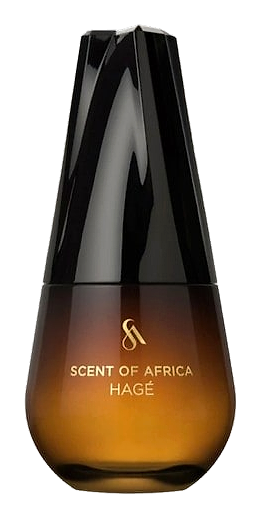
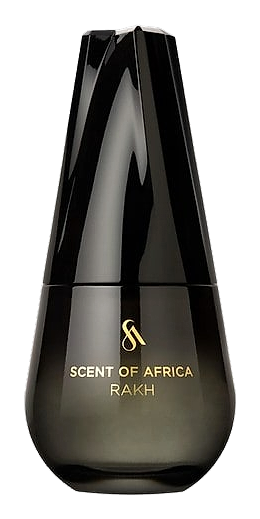
Rakh takes its name from Tiurakh, the Serer god of prosperity and wealth, revered across Senegal, Gambia, and Mauritania. An incarnation of success itself, draped in jewelry and moving toward destiny with the certainty of someone who has already won. Scent of Africa translated that figure into fragrance in 2022, commissioning Olivier Pescheux. The brief was clear: capture the gravity of a divine man who attracts fortune simply by existing. Elegance as armor. Spicy amplitude on a woody foundation. The name carries weight before the juice even hits skin, and the composition works hard to honor that charge. Pescheux approached the brief with the kind of restraint that lets individual materials speak in full sentences rather than fragments.
Pescheux built Rakh around a vertical structure. Warm and cold spices face each other across the composition, creating the trembling, majestic quality he described in his own notes. Madagascan clove brings heat and sweetness in equal measure, while black pepper adds that sharp, insistent bite. Haitian vetiver and cedar form the spine, two woods that anchor without weighing down. Grapefruit enters as a single flash of golden light, then retreats. The result is a fragrance that doesn't sprawl across the skin. It rises.
The evolution
The first spray announces itself. Madagascan clove hits the front of the nose with almost medicinal intensity, then black pepper tightens everything behind it. Grapefruit tries to cut through, and for about ten minutes, it does. The opening reads almost confrontational, like someone leaning into a conversation to make a point. By the thirty-minute mark, the pepper and grapefruit have negotiated a truce. The clove settles, and the heart begins. Haitian vetiver arrives first, earthy and slightly smoky, followed by cedar's dry, pencil-shaving warmth. There's a subtle fruit here, apple maybe, that softens the wood without sweetening it. The floral note is a rumor, not a presence. The drydown is where the composition earns its reputation. Somali frankincense takes over, resinous and ancient, and the musk underneath gives it skin. This is the phase that lasts. Hours in, the spice is gone.
Cultural impact
The framing of Tiurakh, the Serer god of prosperity, as the conceptual anchor of Rakh draws directly from a specific cultural lineage rooted in Senegal, Gambia, and Mauritania. Rather than reaching for the usual references that populate luxury fragrance, the house grounds its central figure in the mythology of a people with their own long relationship to scent, ritual, and reverence for abundance. The ingredient list reinforces this grounding: Madagascan clove, Haitian vetiver, Somali frankincense, each carrying its own geographic identity rather than being reduced to a generic category on a pyramid.