
The Story
Why it exists.
The beginning
Pierre Bourdon created The Great Inca Priestesses as part of Roméa d'Améor's collection of seven fragrances, each honoring a remarkable woman who shaped civilization. Here, the subject is the high priestesses of the Incan empire. Bourdon built the scent around a luminous opening of citrus and aldehydes that feels sunlit and ceremonial, like the first moments of a ritual. The heart introduces jasmine and rose, softened by spices that suggest warmth and complexity. As the fragrance dries down, it settles into a resinous base of amber, sandalwood, and soft musk that feels grounded and intimate. That interplay between brightness and depth mirrors the duality of the subject: the ceremonial glow of public devotion and the quiet persistence that lingers when the ceremony ends.
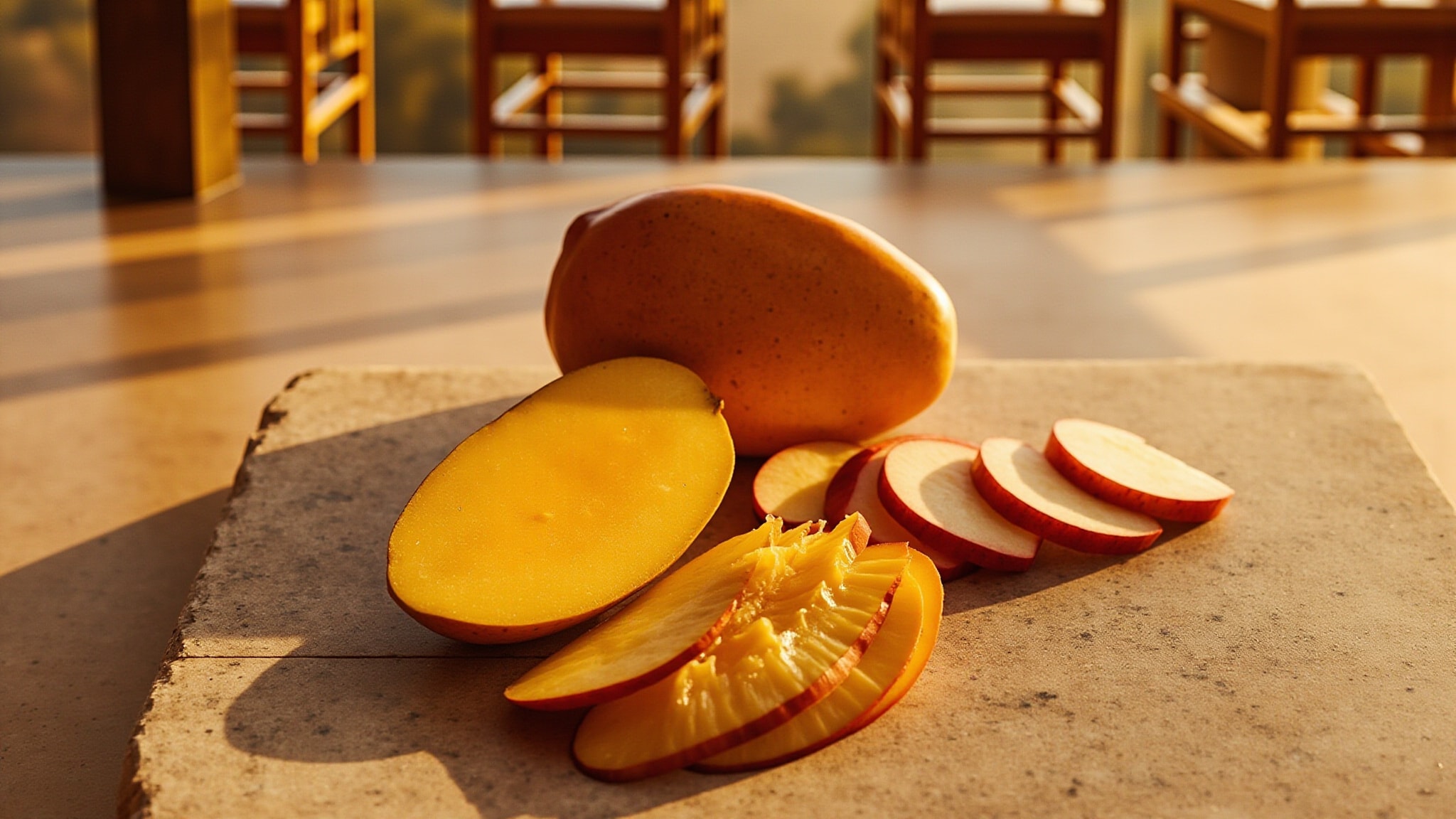
The composition pulls off something unusual: a tropical opening that doesn't cloy, and a base that doesn't disappear. The mango note is front and center, but grapefruit and Italian mandarin keep it from becoming syrupy. The heart of orchid and lily of the valley adds an aquatic transparency that bridges the brightness of the top notes with the warmth of the base. Caramel and dark chocolate in the drydown are unexpected in a tropical fragrance, they give it depth without heaviness, which is the real trick here.
The evolution
The first hour belongs to mango and red apple, with citrus support from grapefruit and mandarin. It's bright, sun-drenched, almost playful. Around the ninety-minute mark, the aquatic florals take over, orchid becomes more present, lily of the valley adds quiet freshness, and the tropical sweetness begins to soften. The rose doesn't announce itself; it lingers in the background, giving the heart a powdery lift. By the third hour, the base arrives. Sandalwood and teakwood provide warmth without weight. Caramel and dark chocolate create a gourmand sweetness that feels earned rather than tacked on. Vetiver and oakmoss keep everything grounded. The drydown lasts several hours more, close to the skin, intimate, with a warmth that stays. By the next morning, there's a faint trace of sandalwood and musk on fabric.
Cultural impact
The house built its identity on historical storytelling, framing fragrance as narrative rather than pure aesthetic. This approach appeals to collectors seeking something with substance behind the scent. The Great Inca Priestesses draws on a specific cultural reference point, weaving historical inspiration into its composition in a way that feels intentional and layered rather than superficial. The fragrance's interplay of luminous top notes, warm heart notes, and a rich, lingering base creates a scent experience that rewards attention, offering complexity that stands apart from simpler, more straightforward offerings on the market.