The Story
Why it exists.
The beginning
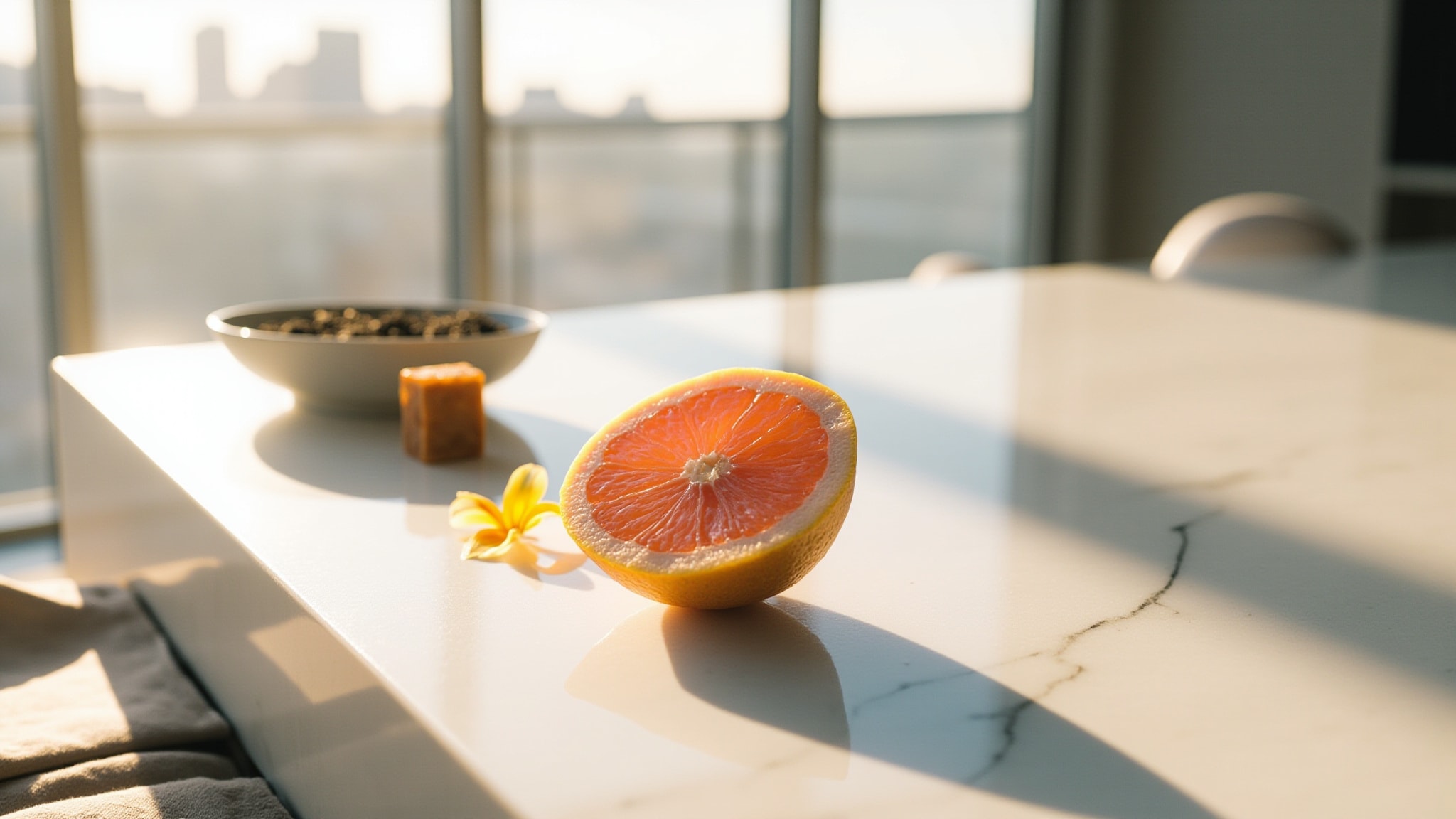
Lost in Translation is Rasei Fort's 2024 love letter to an orchard. The blossoms hang heavy enough to taste in the air, and he pulled that orchard into a bottle without losing its warmth. What lands first is the brightness of orange and grapefruit, sharp and sun-warmed, the kind of fruit scent that feels picked rather than perfumery-stylized. There's an intimacy to the way the composition handles its sweetness, never letting the citrus read as generic cologne but keeping it grounded in something ripe and edible. The whole thing feels like a quiet dedication, less about showing off and more about translating a specific sense memory into something you can wear.
The unusual move is the way citrus sits alongside butterscotch and caramel rather than standing apart as a clean cologne note. Butterscotch and caramel share the same lineup as neroli and orange blossom, which means the sweetness arrives early and never fully leaves. White musk at the base keeps the whole thing from tipping into confection. It reads as confection-adjacent instead of candy, with the gourmand elements woven into the floral-citrus architecture rather than sitting on top of it.
The evolution
The first stretch belongs to the orchard. Grapefruit and bitter orange hit sharp and bright, with a faint coolness underneath that keeps the citrus from feeling synthetic. As the composition settles, butterscotch introduces itself without announcing it, sliding into a floral heart of jasmine sambac, lily of the valley, neroli, and orange blossom. This is where the scent blooms widest, juicy and glowing, with the florals softening the citrus rather than hiding it. The caramel-vanilla base arrives warm and a little syrupy, and white musk pulls it back close to skin rather than letting it float. In the late drydown the composition thins to a soft vanilla-musk trace that holds on cuffs and hair, lingering well into the next morning. Sillage opens generous and then quietly retreats, settling into an intimate close-to-skin presence that still projects softly when you move.
Cultural impact
This is the kind of citrus that lands closer to a gourmand than a traditional eau de toilette, and that tension is the point. It reads as a sweet, lactonic-floral profile that borrows from honey-and-citrus territory but stays cleaner and more direct than heavier orientals in the same family. Wearers tend to describe it as an easy entry into the brand, approachable enough for someone testing Rasei Fort for the first time and crowd-pleasing enough to please longtime fans. It works as a transitional scent for anyone curious about gourmand fragrances but not ready to commit to full dessert territory.