The Story
Why it exists.
The beginning
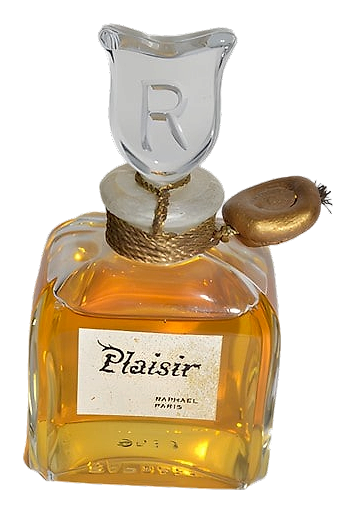
Paris, 1956. Plaisir arrived wearing a name that carries its own manifesto. Plaisir. Pleasure. Not the dark, complicated kind, but the straightforward delight of a warm afternoon, a garden in bloom, a young woman walking without somewhere urgent to be. The fragrance captures that mood with a simplicity that feels almost radical in its directness. There's no dense layering here, no intellectual puzzle to solve. Just florals, greens, and spices working in clean conversation with one another. The opening lifts with green notes that read as freshly cut, almost like the moment you step outside into late spring. Rose enters early, bright and clear rather than the heavy, jammy rose of later decades.
What makes Plaisir interesting is its restraint within a genre that often tipped into excess. The composition is built on just three declared territories: florals, greens, and spices. The chypre floral classification offers one way to think about its architecture, a sweetness with something quieter organizing it from underneath. Rose and jasmine form the floral core, carrying most of the emotional weight, while green notes give the opening its crisp lift and spice keeps the whole thing from dissolving into pure sugar.
The evolution
The first ten minutes open green and bright, carrying a citrus lift that reads like the first snap of cool air after stepping outside. Pink pepper adds a fresh, slightly buzzy warmth that prickles just beneath the green, more sensation than flavor. Rose arrives quickly after that, light and clear, never settling into the dense, velvety territory rose can claim in heavier compositions. The spicy notes flicker underneath, warming the floral rather than competing with it. By the thirty-minute mark, the composition settles into a soft, sweet haze, what one wearer called a Sugar Baby scent, the olfactory equivalent of a candy shop on a summer day. Jasmine adds a creamy undertone while light woody-green notes provide just enough structure to keep everything from dissolving into pure sweetness.
Cultural impact
Plaisir occupies an unusual place in vintage fragrance circles. Algorithmic recommendation lists on collector sites place it alongside Guerlain's Chamade and Nina Ricci's L'Air du Temps, both more widely recognized names from the same period, though such pairings reflect browsing patterns rather than editorial endorsement. The fragrance is now discontinued, which makes surviving bottles something collectors track with care. It rewards patience, the kind of scent that asks you to slow down and pay attention to what's actually on your skin rather than what the bottle promises.