
The Story
Why it exists.
The beginning
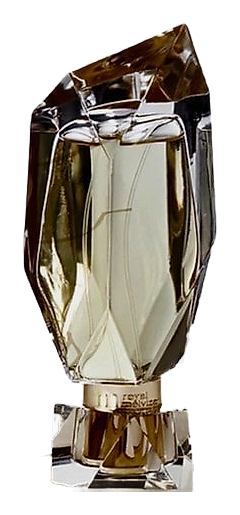
Alicanto takes its name from a luminous bird of Chilean legend, a creature said to guard mineral caves deep in the Atacama and to glow with a golden light that could blind anyone who followed it underground. Ramon Molvizar borrows that mythology loosely. The bird becomes a color here, a warm white-gold radiance, the kind of hue that lives at the edge between bright and burnished. The fragrance translates that idea into scent form: a composition that opens effervescent and bright, then gathers a warmer, more private glow as it settles into skin. The opening pours out citrus stacked against citrus, ginger's clean snap cutting through mandarin and lemon zest so the brightness doesn't go flat.
The composition earns its keep through a specific kind of restraint. Citrus openings can read as flat or as interchangeable; this one stacks different expressions of the same idea to keep the light from going uniform. Green mandarin and lemon zest bring the sharp, zesty register, each pulling toward a different facet of citrus. Petitgrain pulls in the bitter leaf, that bitter-green stem quality that makes mandarin taste less candied and more like a grove just after rain.
The evolution
The opening arrives in a rush: ginger's clean heat, then a quick pour of lemon zest and mandarin that reads almost sparkling on first contact with skin. Petitgrain threads through underneath, lending the citrus a green bitterness so the brightness doesn't read as synthetic. The first ten minutes are the loudest the fragrance gets, a fizzy pour of citrus that warms against pulse points. By the half-hour mark, the citrus has cooled and the heart starts to register. White tea and neroli take over the lighter notes, with neroli adding a soft floral edge that keeps the tea from feeling austere. Sage introduces a dry, herbal quality that softens what came before, pulling the composition toward something greener and more grounded. Bamboo does its quiet work here, adding a translucent quality to the middle phase so the sage doesn't read as a kitchen cabinet.
Cultural impact
Alicanto arrives as something specific within the Ramon Molvizar catalog: a fragrance built almost entirely from citrus, tea, and white woods, with no oriental base, no resinous sweetness, no dense amber to weigh the composition down. That structural choice gives it a transparency more associated with classical cologne traditions than with the heavier, denser register the niche market has spent years celebrating.