
The Story
Why it exists.
The beginning
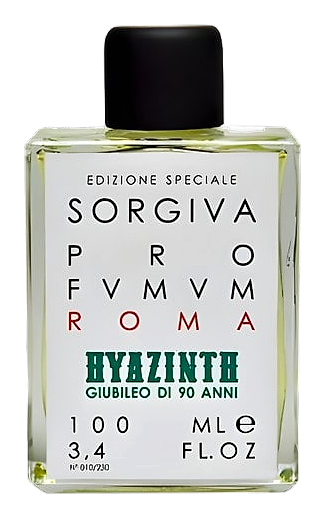
Sorgiva takes its name from an Italian spring, water rising from the earth in a specific place, carrying something mineral and alive. The name alone should tell you this fragrance isn't interested in abstract luxury. It's interested in a moment. Created in 2011 to mark the 90th anniversary of perfumery Hyazinth in Basel, Sorgiva arrived with a quiet confidence: a fragrance named after a natural spring, built from green florals and warm woods. The lemon and melon opening feels like a clear choice. What follows is less expected.
Melon and white florals seem like a soft combination until geranium and jasmine arrive and introduce a green, almost leafy quality. The surprise isn't the sweetness, it's the structure underneath. Sandalwood has a way of registering as almost vanillic on certain skin, which explains why one early reviewer swore vanilla was in the formula when it wasn't. The perfumer confirmed it: what they were smelling was sandalwood doing sandalwood things. Black pepper adds a quiet spiciness that keeps the florals from getting precious. The result is a fragrance that smells fresher than it is.
The evolution
The opening hits immediate and bright. Lemon, grapefruit, mint, a cold rush that reads as almost aggressive in the first twenty minutes. Then the melon arrives and softens the edges without diluting them. The transition into the heart is where Sorgiva earns its reputation. Geranium and jasmine arrive gradually, the rose taking longer, and for a brief window the composition smells like green stems cut in a garden. Black pepper waits until the florals have settled before introducing itself, a small heat that grounds everything. The base is where this fragrance lives for most of its life. Sandalwood and cedar are substantial, and white musk keeps the whole thing close to the skin rather than projecting outward. Eight to ten hours on skin, though some wearers report it lasting longer on fabric. The next morning, if you press your wrist to your nose, you'll find a quiet trace of sandalwood and something almost creamy beneath it.
Cultural impact
Sorgiva has outlasted its 2011 release to become a quiet cult favorite, the kind of fragrance that circulates in forums not because it was heavily marketed but because people keep coming back to it. The unusual melon and sandalwood pairing has earned it a reputation as a fragrance that rewards attention. Limited and discontinued, it now circulates primarily through specialty retailers and second-market channels.