
The Story
Why it exists.
The beginning
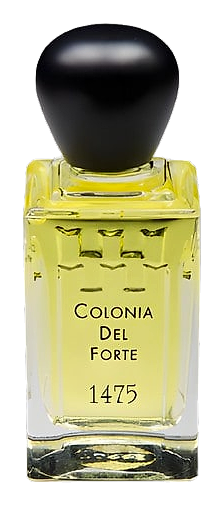
1475. That's not a marketing flourish. That's the title of a cologne from Profumi del Forte, a house whose Colonia del Forte line draws from figures who reshaped Tuscany. Each fragrance in the line carries a number. Colonia del Forte 1475 joins two siblings (1265 and 1452), forming a trio that reads more like an archive than a product range. The house built this cologne on a clean marine-woody architecture: salt and sea water in the heart, ginger threading warmth through the middle, oakmoss and vanilla anchoring a base that never gets heavy. Released in 2011, it sits at the intersection of Italian cultural evolution and contemporary lightness, distilling coastal air, Tuscan stone, and a certain Renaissance curiosity into a bottle small enough to carry anywhere.
What's distinctive about this cologne is the saltwater. Salt and sea water sit in the heart alongside ginger, and that combination does something most marine colognes avoid. Salt on skin reads warm, mineral, almost edible, rather than cold or synthetic. Pair it with ginger and you get clean heat, like spice without fire. The base pulls it back to earth: oakmoss for that chypre grounding, vanilla for sweetness that doesn't announce itself. It is a cologne that keeps one foot in the sea and one in a Tuscan forest.
The evolution
The first ten minutes belong entirely to the lemon. Bright, sharp, almost bitter, backed by the green bite of crushed leaves. Then the ginger arrives, not hot but warm, and the salt shows up right behind it, mineral and skin-close. The top notes don't exactly vanish, they thin. Around the two-hour mark the oakmoss takes over, and you get a quiet woodiness that carries a trace of vanilla sweetness underneath. It doesn't project past arm's length. What it does is sit on skin all afternoon, getting quieter and more comfortable, finally fading into a moss-vanilla trace that lingers on fabric into the next day. The shift from opening to drydown happens gently, more like a tide going out than a curtain falling. The lemon retreats to a citrus memory rather than disappearing entirely. The ginger softens into something almost creamy. The salt loses its briny edge and becomes a clean skin scent.
Cultural impact
Part of a three-piece set (1265, 1452, 1475) drawing from figures who reshaped Tuscany, Italy, and the wider world, this cologne belongs to a small canon of numbered releases inside the Profumi del Forte portfolio. It's for people who read the box. The line's numbered naming convention borrows from archival cataloging, treating each release as a numbered entry in an ongoing document. Each bottle gets read against its siblings, and the trio forms a set you can hold on a shelf and compare nose to nose.