
The Story
Why it exists.
The beginning
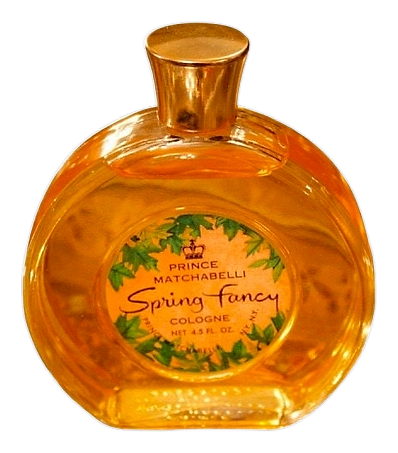
Prince Georges V. Matchabelli brought Georgian aristocratic heritage to New York when he founded his house in 1926, channeling royal lineage from the Caucasus into fragrances that felt both noble and wearable. Partnering with actress Norina Gilli, Matchabelli transformed personal legacy into art that anyone could carry. Spring Fancy, launched in 1955, captures a specific moment in American perfumery when elegance meant restraint and craftsmanship meant longevity.
Spring Fancy was built on matching principles that connect each phase. The aldehydes lift the florals without overwhelming them. The green notes balance the powdery sweetness. The woody base anchors everything with stability. Heliotrope and rose share a soft, romantic quality that defines the heart, while lavender and cedarwood provide contrast that prevents the composition from becoming purely sweet. Musk ties the drydown to the opening aldehydes, creating a circular completeness where warmth echoes the initial brightness in a different register.
The evolution
Spring Fancy moves through distinct phases that reflect its 1955 origins. The opening bursts with aldehydic brilliance, supported by citrus and neroli that feel bright and immediate, while green notes and hay add an unexpected earthiness that grounds the composition in garden realism. The heart softens into classic powdery florals, with rose and heliotrope creating a sweetness that stays refined rather than overwhelming. Violet and lavender add nuance without disrupting the composed character. The drydown settles into woody and mossy territory, with cedarwood providing structure and oakmoss lending vintage depth. Musk completes the arc with warmth that stays close to the skin, extending the experience into quiet hours.
Cultural impact
Spring Fancy is a snapshot of post‑war optimism, a vintage spring floral that still feels fresh decades later. Though discontinued, collectors prize it for its classic aldehydic‑green opening, a hallmark of 1950s American perfumery. Its light, garden‑inspired profile often appears in retrospectives of mid‑century femininity, reminding wearers of a time when perfume was a daily ritual of subtle confidence.