The Story
Why it exists.
The beginning
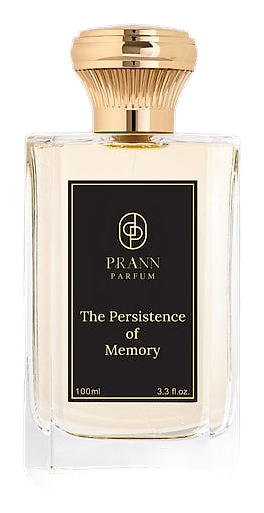
The Persistence of Memory borrows its title from Salvador Dalí's painting, the one with the soft watches draped over a barren dreamscape. Prann conceived this as an olfactory translation of Surrealism, that art-historical movement where clocks lose their grip on the real and the impossible becomes domestic. The perfumer assigned to that vision was Honorine Blanc, and the brief was clear: translate Dalí's juxtaposition of the familiar and the uncanny into something you could wear. What emerged is less a literal recreation of the painting and more a mood built around its central paradox, that time, as we measure it, might be the fiction, while scent, the thing we can't quite pin down, is what actually stays.
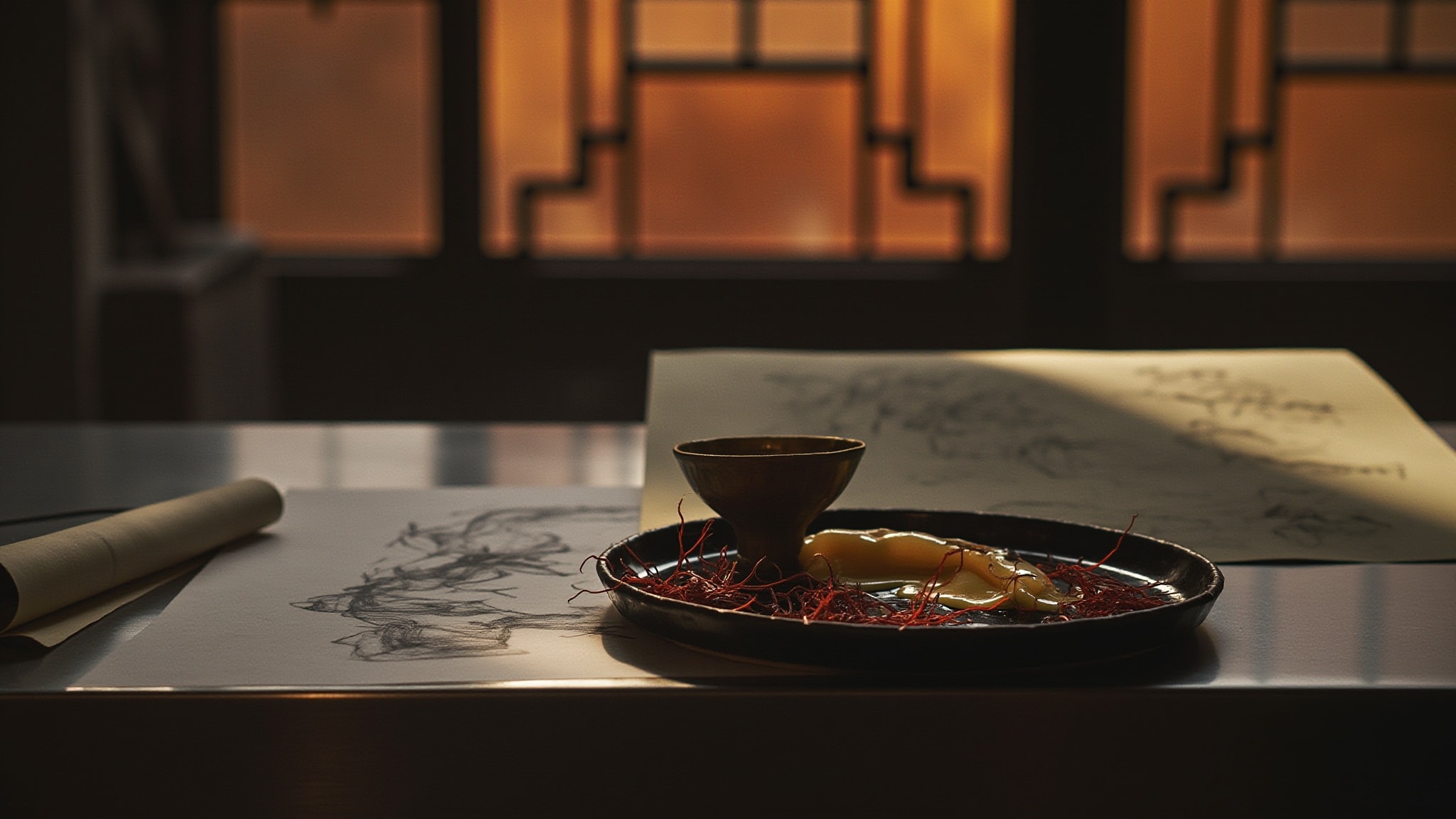
What's interesting here is the structural decision to lead with smoke and incense at the heart rather than burying them in the base. Frankincense, myrrh, and opoponax form a triad that Blanc puts center stage, then drapes iris and benzoin underneath like linens on a chair. The saffron-topped opening reads almost like a warning shot: this isn't going to behave like a polite oriental.
The evolution
The first ten minutes belong to saffron and pink pepper, and they're not shy about it. The saffron reads warm and leathery rather than gourmand, which sets expectations for something more austere than sweet. Jasmine threads through but never announces itself as a floral; it hums underneath the spice like a suggestion, a presence you sense more than identify. By the thirty-minute mark, the resins take over. Frankincense and myrrh aren't decorative here, they're load-bearing. The composition becomes dense, almost architectural, the way incense smoke feels when it fills a room and refuses to leave. Opoponax adds a sweetness that keeps the incense from going cold or ecclesiastical, lending a warm, almost honeyed undertone that softens what could otherwise feel austere.
Cultural impact
The Persistence of Memory occupies an unusual position in contemporary perfume, drawing on Surrealism as both inspiration and interpretive framework. Rather than recreating a literal scene, the fragrance channels the feeling of Dalí's work, that dreamlike suspension where familiar objects lose their expected behavior. This places the composition in a category of scent-as-statement, perfumes that want to be read as well as worn. The incense-forward construction signals a wearer who's interested in depth over decoration, someone willing to sit with smoke and resin rather than expecting immediate sweetness.