
The Story
Why it exists.
The beginning
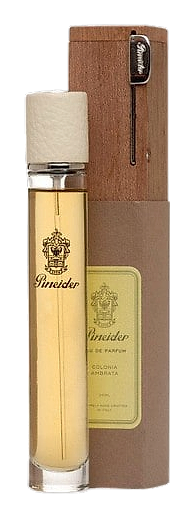
Colonia Ambrata arrived in 2012 from the house of Pineider. "Ambrata" means amber in Italian, not the stone, but the idea of it. Something golden and ancient. The fragrance carries a sense of patrician heritage, understated and refined, translating into scent.
What makes this structure unusual is the ivy-cashmere wood pairing. Ivy is rarely the headline, it's the supporting bitter note that makes other ingredients more interesting. Cashmere wood is the synthetic that smells like the idea of wood: creamy, warm, modern. Together they create something that feels green but not sharp, woody but not heavy. Bergamot opens. Violet and white rose soften. Ebony, patchouli, labdanum, and musk close. The chypre architecture holds from top to bottom.
The evolution
Bergamot and ivy arrive together, herbaceous, resinous-sweet, like crushed leaves on sun-warmed stone. The bitterness of the ivy is the tell. Twenty minutes in, violet arrives quietly, threading through the green. The rose and cashmere wood warm the composition as the sharp edges settle. By the second hour, the base takes over. Ebony and labdanum bring resinous depth, patchouli adds earth, musk softens everything into skin-warmth. The ivy remains present as the composition evolves, a lingering herbal thread that connects back to the opening. The sillage begins moderate and holds its presence throughout the wear.
Cultural impact
Colonia Ambrata occupies a quieter corner of niche perfumery. It's for someone who understands Florentine restraint, who doesn't need the fragrance to announce itself. The positioning leans toward discretion, a scent for those who appreciate understated elegance. This is a fragrance that speaks softly but with conviction.