
The Story
Why it exists.
The beginning
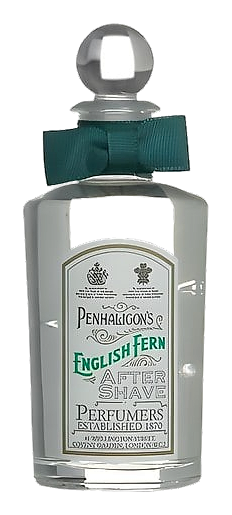
The English fern, Dryopteris filix-mas, once carpeted the woodland floors of a country that was still finding its relationship with industry. It wasn't just a plant. It was a mood, a texture, a specific quality of light filtering through green fronds in a place where the air smelled of moss and rain. Walter Penhaligon looked at the fern and saw a fragrance waiting to be made. The year was 1890. The result was an aromatic study in green, not the bright green of citrus or cut grass, but the deeper, earthier green of something that has been growing quietly for centuries, asking nothing of the light except enough to survive.
What makes English Fern distinctive isn't any single note, it's the way the pyramid holds together without anyone noticing the seams. The lavender doesn't dominate. The geranium doesn't scream. The cloves sit in the heart like a private joke between the fragrance and itself. The real magic is in the oakmoss and patchouli base, which together create what can only be described as the olfactory equivalent of a well-worn leather chair: comfortable, distinguished, and impossible to replicate with newer materials. Sandalwood softens the whole thing into something that wears close to the skin, intimate without being invisible.
The evolution
English Fern opens with a brief moment of herbal sharpness, lavender and geranium arriving together, the geranium providing a slightly rose-like sweetness that softens what could have been medicinal. This lasts perhaps twenty minutes before the cloves announce themselves, adding a warm spiced note that feels almost autumnal. Then the base takes over, and this is where the fragrance earns its name: oakmoss creates that green, slightly fungal, forest-floor quality, while patchouli keeps things earthy and grounded. Sandalwood appears last, smoothing everything into a soft, slightly powdery drydown that remains close to the skin for hours. On fabric, the oakmoss lingers overnight.
Cultural impact
English Fern occupies an unusual position in the Penhaligon's catalogue: a fragrance that most people have never heard of, beloved by those who have found it, and quietly discontinued at some point in the past decade. It represents a particular kind of classic fougère, not the soapy-clean modern interpretation, but the older, greener, more aromatic style that defined the genre before reformulation pressures changed the landscape. For those who remember the original, English Fern is a quiet landmark. For those discovering it now, it functions as a kind of olfactory time capsule, a reminder that restraint was once considered a virtue in perfumery, and that not every fragrance needs to fill the room to leave an impression.