
The Story
Why it exists.
The beginning
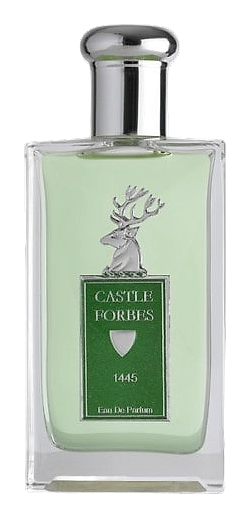
Andrew French designed 1445 in 1997, at a moment when the fragrance industry was beginning to chase intensity and sillage as proxies for quality. His counter-move was restraint. The name itself is a quiet confidence: 1445, nothing more, nothing less. No myth, no marketing narrative, just a number that asks the composition to speak for itself. French understood that Castle Forbes operated outside the fashion cycle of fragrance houses, answerable only to the wearer's experience, not to trend cycles or industry expectations.
The note structure is classic fougère architecture, but French populated it with materials that keep the formula from feeling like a textbook exercise. Petitgrain and lemon open clean and bright, the kind of citrus that reads as morning rather than summer. The tarragon in the heart is the interesting choice, bringing an herbal, slightly aniseedy quality that sets this apart from the lavender-forward fougères of the same era. Vetiver anchors the base with its mineral, earthy character, while cloves add warmth and patchouli adds the kind of depth that lets the scent linger without projecting.
The evolution
The opening is the shortest phase, 15 minutes at most, before the citrus fades and the lavender takes over. That transition is smooth but decisive. Once the heart settles, the fragrance enters its longest phase, the lavender-tarragon core that carries for the next 4-5 hours. This is where the fougère character becomes most apparent, green and herbal with just enough warmth to keep it from feeling cold. The base notes arrive gradually, the vetiver and patchouli emerging slowly as the lavender begins to fade. The drydown is quiet and close, the kind of scent that stays on skin rather than filling a room. On fabric, it lasts well into the next day, faint but present, like a memory of something pleasant.
Cultural impact
Released in 1997, 1445 arrived at a moment when the men's fragrance market was dominated by bold, projecting scents designed to announce presence. This was a different proposition: a fougère built on restraint, designed for someone who wanted to be noticed at close range rather than filling a room. It's the kind of fragrance that ages well because it never tried to be anything other than what it is. Wearers who return to it often cite its ability to smell like a refined version of itself, without the reformulation drift that has affected many fragrances from that era.