
The Story
Why it exists.
The beginning
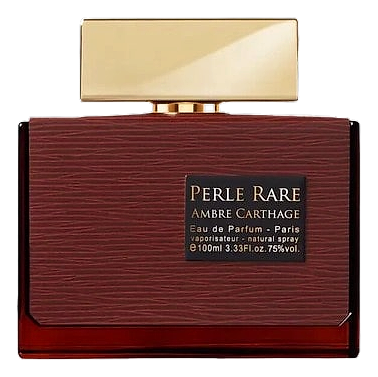
Perle Rare Ambre Carthage takes its name from Carthaginian amber, the ancient Mediterranean trade routes where raw aromatic materials moved between continents. The Perle Rare line within Panouge Paris represents the house's rarest materials, and this 2024 release leans into the tension between brightness and warmth. Jean Jacques built this fragrance around the idea of contradiction: jasmine tea's green, slightly bitter quality against the honeyed depth of bergamot. Birch wood adds an unexpected rawness that shouldn't work but does. The goal was a scent for someone permanently in transit, not the arrival, but the crossing. Panouge approached this like they always do: material first, concept second. The name hints at ancient trade, at ingredients that traveled before they became perfume.
The jasmine tea and bergamot pairing is unusual because jasmine tea is green, slightly bitter, while bergamot is sweet and citrusy. These notes should fight. They don't. The birch wood in the top accord is the unexpected decision, adding a rawness that makes the florals smell more alive, less pot-pourri. In the heart, Indonesian patchouli provides the dark, earthy counterweight to the bright opening. Osmanthus is the rare choice here, an ingredient few houses use, known for its apricot-leather character that adds sweetness without softness. The drydown brings sandalwood and olibanum together, creating warmth that doesn't overshadow the earlier complexity.
The evolution
The opening announces itself with jasmine tea's green-floral intensity, bergamot's citrus lift cutting through immediately. Birch wood adds a slight rawness, the bark, not the tree. Thirty minutes in, the osmanthus and patchouli arrive together. The patchouli is Indonesian, dark and slightly sweet. The osmanthus adds an apricot-like softness that tempers it. By the second hour, the florals recede and the base takes over. Sandalwood and amber build warmth. Olibanum, the frankincense, introduces a resinous smoke that wraps everything together. The musk in the base is animalic, sensual, present. By the third hour, the jasmine tea is gone. What's left is warm, resinous, and intimate. The drydown holds for another five hours, close to the skin, projecting moderately. On fabric, it projects further in the first two hours, then settles. By the end, it reads as a skin scent, intimate, meant for the people standing close enough to notice.
Cultural impact
Panouge's Perle Rare Ambre Carthage draws on North African amber traditions and jasmine tea rituals that have shaped Mediterranean perfumery for centuries. The 2024 release enters a market increasingly drawn to unconventional oriental compositions that break from sweet, resin-heavy stereotypes. Jasmine tea itself carries cultural weight in both Chinese and Middle Eastern contexts, representing hospitality and contemplation. By positioning this note as the focal point rather than a supporting element, Panouge signals a shift toward bitterness and greenery in mainstream oriental woody fragrance. The house, founded in 1946, has built its reputation on raw material expertise, and this release reinforces that commitment to material-driven storytelling.