
The Story
Why it exists.
The beginning
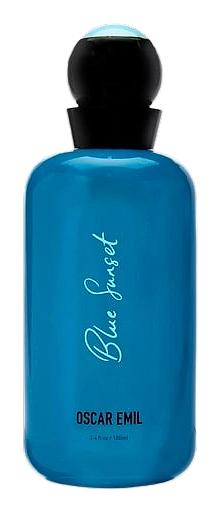
Second Persona arrives as part of Oscar Emil's debut, a six-piece release that frames scent as the documentation of a relationship's emotional arc. Where earlier entries trace attraction and doubt, Second Persona names the moment of reinvention. Each fragrance is designed as a distinct phase of inner experience. Second Persona sits at the threshold where you shed who you were and meet who you're becoming. The official copy names it plainly: quiet strength of transformation, clarity of new beginnings. Bergamot cuts the air first, bright and cold-bright, then Damask rose rises underneath, green-edged and lifted rather than syrupy. The opening reads like clarity itself, the olfactory equivalent of a window thrown open after a long, airless winter.
What's unusual here is the structural ambition. Oscar Emil organizes around feeling, and Second Persona's composition reflects that intent: a bright citrus-floral entry that reads as fresh clarity, an oud-and-tonka heart carrying complexity and depth, and an animalic base built on amber, musk, and patchouli that grounds the whole thing in something primal. The contrast between Damask rose's refined brightness and the raw animalic drydown isn't accidental. It's the composition's thesis. The person you were smells like flowers. The person you're becoming smells like skin, fur, fire.
The evolution
The first 20 minutes belong to bergamot and Damask rose, bright and almost buoyant, the kind of clarity that feels like stepping out of a cold building into late-afternoon sun. The rose isn't jammy or old-fashioned. It reads modern, slightly green, lifted by the citrus overhead. Around the 30-minute mark, tonka bean and oud begin to pull the composition downward. The powdery facet adds a soft, almost cosmetic haze. The oud here is restrained, slightly fruity rather than medicinal, and it bridges the opening's brightness to the base's weight. After two hours, the animalic notes, amber, and patchouli take over. This is where Second Persona earns its name. The musk is warm, close, and unmistakably alive. It clings to skin rather than radiating. By hour five, the composition has settled into a dense, almost meditative base. The rose is a memory. The oud is a hum. What remains is the animalic warmth, amber, and a final trace of patchouli's earth. The next morning, there's still something there, a skin-scent whisper that survived the shower. It doesn't project.
Cultural impact
Second Persona sits at an interesting compositional intersection. It reads as the work of someone studying how animalic bases and floral openings interact, and how those interactions can carry emotional weight rather than simply displaying raw materials. The decision to organize a fragrance collection around emotional narrative, with each piece functioning as a chapter of a love story, is the more unusual structural choice. Second Persona, positioned as the chapter about self-reinvention, is where that thesis gets tested most directly. Wearers tend to notice the drydown over the opening, and that's revealing.