The Story
Why it exists.
The beginning
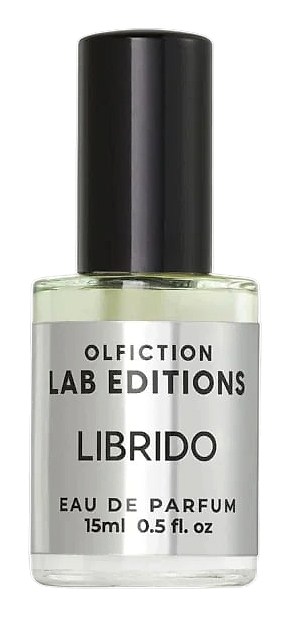
Librido is a love letter to the printed word, composed by Pia Long for Olfiction's Lab Editions collection, released in 2026. The brief was disarmingly precise: capture the smell of paper. Not the abstract idea of it, but the actual olfactory fingerprint of a printed page, fresh off the press or yellowed at the edges, bound in glue and leather. Long, a trained perfumer, brought her sensibility for raw materials and nuance to the project, and it shows in the discipline of the composition. The result is less a perfume than a scene: an impossibly handsome librarian, a lifted glance between stacks, a thumbprint left on a page you meant to buy. It smells specific the way a memory is specific, the way a place you haven't been back to in years can come back through one inhale.
What makes Librido interesting is the range of paper it's trying to be. New magazine, fresh paperback, and aged leather-bound tome all coexist in the same composition, which is technically ambitious and practically rare. The brief asked for one material and Long returned a small library, stacked rather than blended, with each texture given room to breathe.
The evolution
Librido opens with a sharp, almost metallic brightness, the ink note reading cold and volatile, with lemon cutting through like solvent. Within fifteen minutes the edges soften. Paper and papyrus take over, dry and fibrous, with iris lifting the whole thing into something unexpectedly powdery, like the dust that falls from an old hardcover when you open it on a summer afternoon. The cedarwood underneath hums quietly through the heart, more structural than aromatic, the kind of woody note you'd miss if you weren't paying attention but would feel immediately if it were gone. By the two-hour mark, the composition has fully committed to its second act. Leather arrives first, subtle and worn, followed by Australian sandalwood, which gives the base a creamy, almost buttery warmth that wasn't visible in the opening.
Cultural impact
Librido is the kind of scent that reads as a scene rather than a scent profile, built around a single material with the kind of obsessive precision that turns a fragrance into a small piece of writing. The Lab Editions framing positions it as part of a working series, a place for compositions that want to be studied and worn closely, and the scent earns that framing. It doesn't perform bookishness, it just is it, and there's a quiet confidence in that. For the kind of wearer who reads the back of the bottle and wants to know what's behind it, this is a book scent that rewards the same attention you'd give an actual book.