
The Story
Why it exists.
The beginning
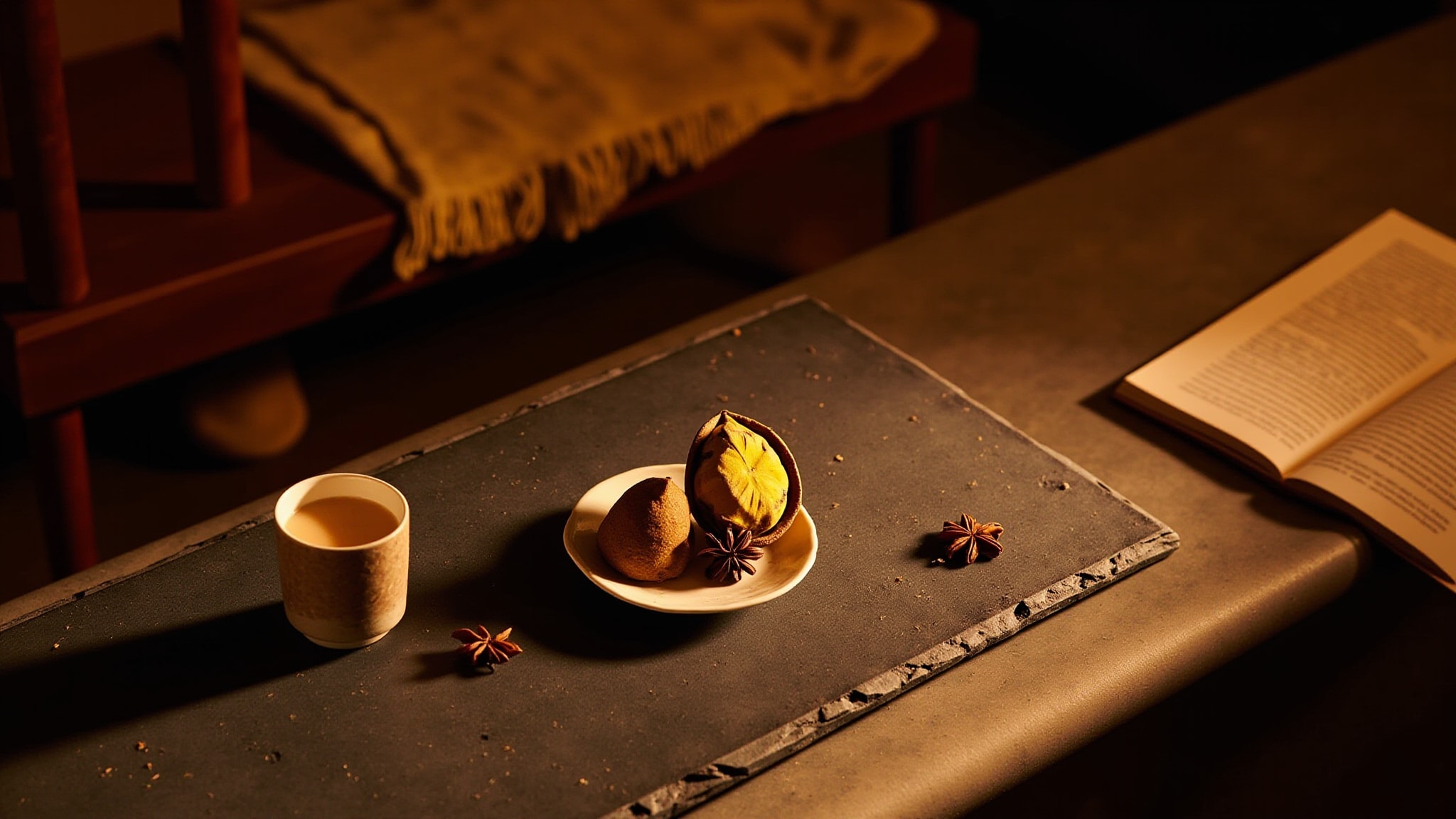
Rhythms of a Day began with a single ritual: the morning cup. Perfumer Anunsith Wongkornvanich set out to bottle not tea itself but the rhythm of sitting with it. Indian masala chai provided the architecture, the slow unfurling of warm spices into tannic black tea, then into something softer, sweeter, a little dusty. The fragrance captures the choreography of an ordinary day, a quiet study in how a familiar routine might be translated into scent. Steam rising off a ceramic mug, the clink of a spoon, the moment before the first sip when everything is still ahead of you. That sense of suspended anticipation is what the composition is really tracking.
What makes this composition interesting is how it handles chai as an accord rather than a recipe. Anise, cardamom, cinnamon, and ginger form the spicy overture, but they don't act alone. Black tea carries the middle, dry and almost bitter, the kind of astringent warmth you get from a steeped brew left to sit just a beat too long. Cloves cut through with that warm, almost medicinal sharpness, the kind that clears the back of your throat. Then mimosa brings a powdery, yellow floral lift that lifts the spices out of the kitchen and into something more atmospheric. It smells like tea.
The evolution
The first ten minutes belong to anise, loud and licorice-bright, with cardamom pushing alongside it like a second voice. Ginger hums underneath, cinnamon barely registers yet. This phase can read as almost savory, a little medicinal, closer to a cough drop than a drink. Then the heart arrives. Black tea floods in, tannic and dry, and the anise has to make room. Cloves spike through, and suddenly the chai accord locks in. Mimosa arrives quietly, a powdery sweetness that softens the spice without dulling it. Over the next two to three hours, the composition shifts again. The tea note thins. Sandalwood emerges, warm and slightly creamy, and vanillin begins to sweeten the edges. Heliotrope settles in last, almond-like and soft, turning the whole thing into a gentle, gourmand drydown that smells less like a drink and more like the warmth left in a cup.
Cultural impact
This is a chai composition that takes its subject seriously, treating the ritual of tea as more than a novelty note. It reads as the scent of someone who actually drinks it, who knows the difference between a spice rack and a chai blend, who understands that the warmth of a cup is as much about the spices blooming in hot water as it is about the tea itself. The mimosa lift gives it a distinctly modern edge, a powdery counterpoint that keeps the spices from tipping into pure kitchen realism.