The Story
Why it exists.
The beginning
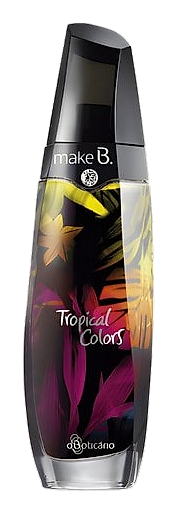
Make B. Tropical Colors arrived in 2014 as part of O Boticário's ongoing exploration of Brazil's sensory landscape. The brief was simple: capture the intensity of a tropical sky at its most saturated, not the beach, not the rainforest canopy, but the moment when heat and color reach a kind of maximum. The perfumer worked with Brazilian botanical materials alongside more international ingredients, building a fragrance that could hold both fruity brightness and smoky depth without one canceling the other. Tropical Colors was designed for the woman who knows her own landscape, literally.
What makes this pyramid interesting is the interplay between the top and base notes. Red fruits and starfruit are inherently fleeting, they arrive bright and disappear fast. But the structure doesn't let them vanish alone. Saffron and cinnamon leaf appear within minutes, layering over the fruit so the sweetness gains weight before it fades. Meanwhile, Indonesian sandalwood in the base doesn't just anchor the drydown, it extends the fruit's presence by giving it something warm to settle into. The leather and tobacco aren't afterthoughts. They're the reason the fragrance has a point of view instead of just a pleasant smell.
The evolution
The opening hits immediately: starfruit's angular sweetness and the rounder red fruits arrive together, like walking into a market stall piled high. Within the first twenty minutes the green notes recede and the spice builds, cinnamon leaf and saffron taking over, jasmine arriving softer underneath. The leather appears around the hour mark, unexpectedly dry against the lingering sweetness. Then the handoff: tobacco and amber move in, the vanilla flower finally asserting itself in the base. The drydown runs long, 6-8 hours on most skin, settling into something warm, faintly smoky, and close to the body. On fabric, it lingers into the next morning as a soft amber-tobacco ghost.
Cultural impact
Make B. Tropical Colors sits within O Boticário's broader catalogue as one of the more characterful entries in the female fragrance lineup. It hasn't achieved the cult status of Malbec in the house's leather range, but among Brazilian consumers it occupies a specific niche, the woman who wants tropical without the usual trajectory into coconut and suntan oil. The 2014 release date places it in a period when the brand was expanding its international presence, testing whether its distinctly Brazilian olfactory language could travel beyond the domestic market.