The Story
Why it exists.
The beginning
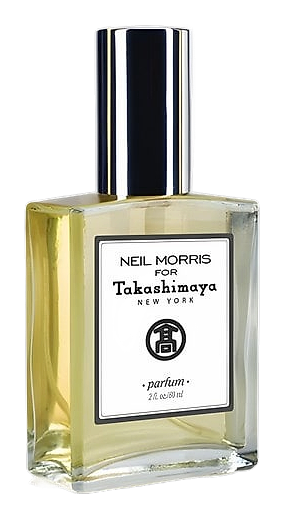
Takashimaya began as a commission for the department store that shares its name, specifically the Tea House boutique inside, where Neil Morris was invited to capture that space in scent. What Morris delivered was not a literal translation of tea or ceramics but something more evocative, a fragrance built around the sensation of entering a Japanese garden as a storm breaks, then watching the sun arrive to dry everything slowly, releasing the true scent of the place. The garden in question sits at the Boston Fine Arts Museum, and Morris has referenced the moment that defined the fragrance: standing in that garden as clouds gathered, wind moved through bamboo and blossoms, and then rain arrived, the air taking on that particular clarity that follows.
The heart of Takashimaya contains six materials: bamboo, orchid, yellow narcissus, Japanese green tea, cherry blossom, and plum blossom, stacked in a way that should read as cluttered but instead achieves something closer to transparency. The aldehydes are the key. They do not simply add brightness; they lift the floral heart into a cooler register, giving plum blossom and green tea a crystalline quality that prevents the composition from becoming sweet or heavy.
The evolution
The opening arrives like fizz and citrus stripped of sweetness. Bergamot and mandarin hit first, but the aldehydes are doing the real work, creating a brightness that borders on sharp, a kind of clean electricity that reads as cold rather than warm. Blackcurrant adds a tart, almost candied edge that keeps the top from feeling purely synthetic. This phase varies by skin type and can be polarizing: some wearers find it bracing and refreshing, while others perceive it as the sterility of a freshly cleaned modern space, as one reviewer bluntly put it. What follows is the surprise. As the aldehydic fizz begins to settle, never fully disappearing but receding like mist, the heart materializes in sequence rather than all at once. Bamboo arrives first, followed quickly by the pale sweetness of plum blossom.
Cultural impact
Takashimaya occupies an unusual position: a commissioned scent for a luxury retail space that has generated significant discussion among fragrance enthusiasts. The fragrance has attracted a community of wearers who return to it specifically for its aldehydic character, finding it distinctive and memorable in a way that most contemporary florals are not. Critics, meanwhile, find the aldehydic opening challenging and note that the floral heart can struggle to emerge on certain skin types. The disagreement is productive.