The Story
Why it exists.
The beginning
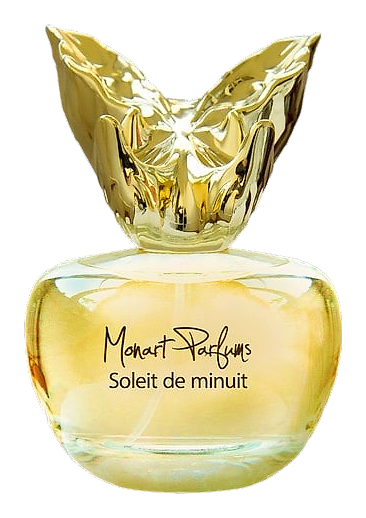
There's something deliberate about a fragrance called midnight sun. It names a paradox: a celestial event that happens only in summer's far north, when the sun never fully sets. Soleil de minuit takes that tension and wears it openly, bright saffron and incense at the surface, then the deeper smoke of dry wood and labdanum underneath. Like daylight refusing to leave, but dressed for the dark. The saffron opens sharp and almost metallic, a thread of gold that pulls the eye upward before the incense takes hold and darkens everything around it. From there, the composition folds inward, smoke stacking on smoke, warmth accumulating in the lower registers. It's a scent that asks you to sit with contradiction, to hold brightness and shadow in the same breath without choosing between them.
What makes this composition worth pausing on is the way it stacks woods. Here, cypriol, guaiac, sandalwood, cedar, and patchouli all show up in the heart, creating layered smoke rather than a single note. Each one carries a different kind of warmth. Cypriol reads earthy, almost root-deep, while guaiac brings the dry heat of embers cooling under ash. Sandalwood adds a creamy undertow, the kind of soft current that keeps the smoke from going brittle, and cedar sharpens the edges just slightly, giving the blend a structural grain.
The evolution
The first fifteen minutes are almost disorienting. Bergamot cuts through, but the saffron arrives fast and almost metallic, and the frankincense brings a church-hush quality that makes the opening feel less like a citrus spray and more like a controlled burn. The saffron has a particular intensity here, a sharp golden thread that doesn't sit still, and it weaves through the incense in a way that keeps the opening active, never settling into a static accord. After thirty minutes, the woods take over. Not gradually, decisively. Cypriol brings an earthy, almost leather-adjacent smoke, while guaiac adds something that reads like ember heat from a dying fire. The patchouli sits underneath, damp and dark, never going sweet. Two hours in, the heart is still going, but quieter.
Cultural impact
Soleil de minuit sits among the less-documented Monart Parfums releases, with limited mainstream visibility but a clear appeal to listeners who gravitate toward incense-and-woods compositions. The the community community ratings reinforce this placement, showing wear concentrated heavily in winter (9 votes) and fall (4), with spring trailing (2) and summer absent (0). Day-versus-night splits favor evening decisively, night at 5 against day at 1, confirming its standing as a fragrance most wearers reach for after dark or in the colder months.