
The Story
Why it exists.
The beginning
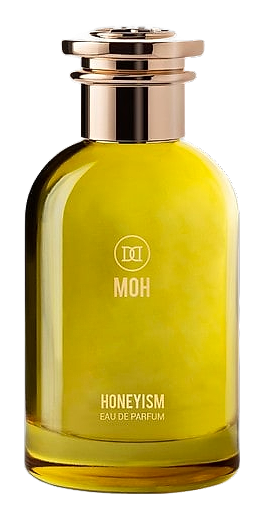
MOH takes its name from the Sanskrit word for attachment, desire, and sensory experience, fitting for a house that treats fragrance as something deeply personal rather than mass-market. The 2024 release Honeyism leans into this philosophy directly: it is a study in warmth, built around the tension between golden sweetness and something darker underneath. The name itself announces its obsession. Honey, in Indian perfumery traditions, carries centuries of meaning, associated with indulgence, with ritual, with the kind of sensory pleasure that creates lasting memory. Perfumer Pia Long worked with this cultural weight, translating the idea of honey not as a single-note gourmand accent but as the emotional core of the entire composition. The result is a fragrance that wears its intention openly: if you have ever wanted to smell like the idea of warmth itself, this is what that looks like.
What makes Honeyism structurally unusual is how the honey is placed, not as a naive top-note sweetness that fades in minutes, but as a full heart commitment that threads through the composition alongside tobacco and florals. Carnation is the quiet differentiator here: spiced and slightly animalic, it gives the honey a complexity that prevents it from reading as merely sweet. Ylang-ylang brings richness and a creamy floral weight that amplifies the honey without competing with it. The tobacco does not smoke, it drapes. These three materials working in tandem create something that avoids the twin traps of honey fragrance: medicinal sharpness on one side, cloying syrup on the other.
The evolution
The opening arrives bright and clear: bergamot and Italian mandarin orange cut through with Tunisian neroli, a citrus-neroli combination that reads as sun-warmed skin rather than cleaning product. The citrus is genuine, not synthetic. Thirty minutes in, the honey enters the conversation, not loudly, but with full presence. It arrives alongside tobacco and carnation, and the three become inseparable. The ylang-ylang adds a floral creaminess that rounds the edges. What is surprising is how little the top notes mattered after this handoff. The citrus fades gracefully, leaving the honey-tobacco-ylang-ylang heart to run the next several hours. By the fourth hour, sandalwood and vanilla have taken over. The drydown is warm, powdery, and close to the skin. A faint labdanum resinous quality lingers into the sixth or seventh hour, still detectable, still warm, never insistent.
Cultural impact
Honeyism occupies a distinctive space at the intersection of South Asian olfactory tradition and contemporary global perfumery. By placing honey, historically significant in Indian perfumery culture, at the compositional center alongside tobacco and Indian sandalwood, MOH bridges heritage and modernity in a way that few independent houses attempt. The honey-tobacco-labd accord is not common in mainstream perfumery, and its unusual character positions Honeyism as a fragrance for those seeking something that does not smell like everything else. The unisex positioning and MOH's semi-bespoke ethos appeal to collectors who want authenticity over familiarity. It is a quiet contender in the niche fragrance landscape, not loud, but worth finding.