
The Story
Why it exists.
The beginning
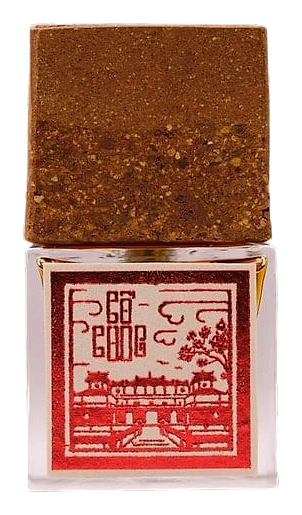
Cố Cung means "the old palace," and that's exactly the room Nguyen Do built for you. Part of the 2025 Cổ Thành Huế collection from Maison de Nguyễn, the fragrance draws from the Nguyen dynasty's imperial architecture in central Vietnam, places where centuries of ceremony soaked into the beams. The perfumer translated that atmosphere into scent: not a museum recreation, but the feeling of walking in after the crowds have left. Buddha's hand on the altar, oud soaked into the woodwork overhead. Released in 2025, Cố Cung is a still-life of a place that was never meant to be lived in casually. Every spray compresses that architecture into something you can carry. Nguyen Do's signature here is restraint. Nothing shouts. Nothing sparkles. The citrus brightens, then steps back.
What makes the composition unusual is the way it balances Vietnamese oud against Buddha's hand, a citrus fruit with a thick, fragrant rind and almost no pulp. The fruit's sharp character gives the opening an unexpected tension: it reads green and slightly medicinal, nothing like a familiar bergamot. Underneath, benzoin does what it always does, sweet and resinous, but here it leans more toward temple incense than dessert. Vietnamese oud anchors the base with a profile that reads dry and smoky, more woodsmoke than barnyard, more leather than animal.
The evolution
The first ten minutes are almost startling. Buddha's hand arrives with a bitter, peppery snap that some wearers mistake for something medicinal, even antiseptic. Then orange blossom and pomelo pull the temperature up, and the sharpness folds into something rounder, sweeter, almost boozy. Around the 30-minute mark, the florals take over completely: gardenia and ylang-ylang form a creamy, yellow-white cloud, and benzoin threads underneath like a slow-burning incense stick. One wearer described the sensation as being taken straight to a golden pagoda in Vietnam, and that impression holds for another hour or two. Then the shift. Patchouli rises first, darkening the composition without killing it. Vietnam oud follows, dry and smoky rather than heavy, with a leathery Peru balsam smoothing the transition. By hour four, the florals are gone.
Cultural impact
Cố Cung arrives at a moment when oud compositions are being reconsidered. Where many oud fragrances lean on intensity, animalic depth, and projection that fills a room, Cố Cung takes the opposite path. The Vietnamese oud here is dry, smoky, restrained, more woodsmoke than showpiece. It reads quiet, contemplative, the kind of scent that settles close to the skin rather than announcing itself to a crowd. For wearers who have found traditional oud fragrances too heavy or too aggressive, this offers a different door into the material.
The House
Maison de NguyễnMaison de Nguyễn is a Vietnamese fragrance house that translates the landscapes, legends, and culinary traditions of Vietnam into wearable compositions. The brand draws from the country's aromatic heritage, which includes a rich tea culture, tropical botanicals, and ingredients native to the highlands and coastal regions. Each release carries a Vietnamese title and centers on a specific cultural reference, from imperial gardens to night-blooming flora. The house operates as a contemporary atelier, presenting its collection through minimal editorial presentations that emphasize provenance and storytelling over conventional luxury signaling. Reviews from fragrance enthusiasts note the brand's commitment to authenticity in its cultural references, with compositions that aim to represent Vietnamese olfactory identity on an international stage.
The Creator
Nguyen DoNguyen Do gravitates toward minimalism with intention, a technique often described as saying more by using less. The approach draws from Japanese aesthetic principles, particularly the concept of negative space and restraint as forms of sophistication.