
The Story
Why it exists.
The beginning
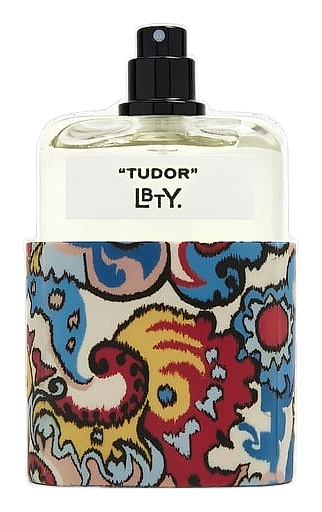
The name carries weight. The tension between sharp, almost cold freshness at the opening and a warm, powdery close is not accidental. Liberty's print archive provided the visual inspiration. Negrin found the olfactory equivalent. The sharp opening gives way to something deeper, the citrus and herbal notes colliding before settling into that lingering powdery warmth. It's a story compressed into a 100ml bottle.
What makes Tudor unusual is the chamomile. It rarely anchors a commercial fragrance, and never this confidently. Most compositions treat it as a supporting player, a quiet herbal note buried in the drydown. Here it enters the heart alongside cypress and myrtle, asserting itself as the compositional spine. The result is a fragrance that smells neither like a typical fresh spicy nor a typical woody. It's that rarest thing: a bridge fragrance. It belongs to no single category, which means it belongs to anyone willing to follow it.
The evolution
Juniper arrives first, cold and crisp. Ginger follows within seconds, its warmth cutting through the initial chill. Nutmeg appears at the edges, a faint spiced hum. For a while, this is an aromatic, almost crisp freshness. Then the hand-off. Chamomile emerges, quiet and herbal. Cypress and myrtle deepen the green, turning the composition dry, almost woody. This is the heart of Tudor and it lasts the longest. The sandalwood and amber arrive together, their warmth overtaking the herbal brightness. Iris adds a powdery softness that lingers on fabric well past the point where the skin has moved on. The drydown on skin reads as warmth. The drydown on fabric reads as memory.
Cultural impact
Liberty's print archive provided the vocabulary. Each textile carries its own aesthetic character, color palette, historical associations. Tudor translates one of those prints into scent. The fragrance refuses to commit to a single category. It's aromatic and woody and herbal and powdery, sometimes simultaneously. That ambiguity is what makes it interesting.