The Story
Why it exists.
The beginning
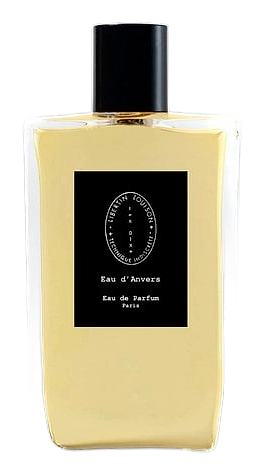
Eau d'Anvers comes from Libertin Louison's Paris laboratory, where the Belgian-born perfumer composes all Technique Indiscrete fragrances himself. The name points to Antwerp, where Louison was born and raised, tying the composition to a specific geography and the perfumer's own roots. It's classified as an Oriental Floral, and it pulls from classical perfumery traditions while reading sheer rather than heavy, a tension that runs through the entire house aesthetic. The orange blossom and apple blossom opening reads bright and ceremonial from a distance, but the heart quickly pivots into darker territory. Honey and rose arrive first, dense and golden, followed by Indonesian patchouli leaf that grounds everything in earthy depth.
What makes Eau d'Anvers worth attention is the deliberate pairing of ceremonial-coded top notes against a base that reads closer to a private chapel. Orange blossom and apple blossom carry associations of innocence and ritual; Spanish labdanum and myrrh belong to a different tradition entirely, the resinous warmth of old-world incense and amber-heavy compositions. Indonesian patchouli leaf bridges these worlds, adding the kind of earthy depth that keeps the sweetness from tipping into confection.
The evolution
The first thirty minutes belong to the blossoms. Orange blossom arrives sharp and almost soapy, with apple blossom softening it into something cleaner, more diffused, the way a fresh bouquet smells when carried through still air. The projection is moderate, close enough that you'd have to lean in to catch it. By the second hour, the honey makes itself known, thick and golden, pulling the rose up with it. Indonesian patchouli leaf darkens the edges, lending the heart an earthiness that keeps the sweetness honest. Tobacco arrives not as smoke but as a warm, dry texture, something between sun-warmed linen and the inside of a leather glove. The rose deepens from bright to bruised, almost jammy, and stays that way for hours. By hour four, the base has settled in fully.
Cultural impact
Eau d'Anvers sits comfortably in the wardrobe of someone who reads technique rather than statement. It's a winter-and-fall composition for the wearer who wants warmth without volume, the kind of scent that rewards attention rather than demanding it. Wearers gravitate to it for the honey-tobacco heart and the resinous drydown, both of which read as quietly serious. Where louder Oriental compositions announce themselves, this one stays close, confident in the density of its construction rather than the reach of its sillage. Its appeal lies in patience: the way it waits for the wearer to lean in rather than projecting across a room.