The Story
Why it exists.
The beginning
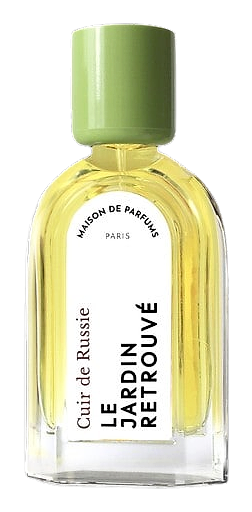
Yuri Gutsatz created Cuir de Russie in 1977, taking his inspiration from a specific moment in European cultural history: the leather boots worn by Diaghilev's Russian Ballet troupe when it arrived in Paris. That supple leather, called safian in Russian, launched a vogue, for bookbinding, for accessories, for the olfactory imagination. Gutsatz, who founded Le Jardin Retrouvé just two years earlier, wanted to capture that translation: how scent carries the memory of material. The fragrance isn't about Russia as a place. It's about Russian leather as an idea, the moment when French perfumers first encountered it and found something they hadn't known they needed.
What makes this composition unusual is the ratio. Leather fragrances typically lead with their namesake note, letting it dominate from opening to drydown. Cuir de Russie uses leather as a destination, not a departure point. The aldehydes arrive first, sharp, effervescent, almost soapy, followed by green violet leaf and the creamy warmth of ylang-ylang. The leather, when it finally arrives, is cushioned by oakmoss and labdanum. It's leather that learned manners. Cade oil and vetiver add a smoky, slightly animal undertone that keeps the base from becoming merely soft.
The evolution
The aldehydes hit first, a bright, almost champagne-like sparkle that fades within fifteen minutes. What replaces it is the violet leaf: green, slightly bitter, like stems before the flower opens. Then the styrax arrives, bringing a resinous sweetness that softens everything. The ylang-ylang follows, creamy and tropical, holding the composition in a state of elegant suspension. By the third hour, the leather emerges, not harsh, but present, warmed by cedar and patchouli. Oakmoss gives it that classic, slightly mossy undertone that dates it comfortably in 1977. The sandalwood and vetiver linger longest, a quiet smoky warmth that stays close to the skin. On fabric, the leather note survives the night. On skin, expect six to eight hours with moderate sillage, present without projecting.
Cultural impact
Cuir de Russie occupies a specific niche in the leather fragrance family, not the bold, smoky leathers of contemporaneous masculine scents, nor the minimalist leathers of later decades. It belongs to a tradition of floral leathers that emerged from 1970s French perfumery, where perfumers balanced classical structure with something more restrained. The fragrance's aldehydic opening places it squarely in its era; its subsequent restraint separates it from louder contemporaries. For wearers who find traditional leather fragrances too heavy, this offers an alternative entry point, one that honors the richness of leather while tempering it with violet and wood.