The Story
Why it exists.
The beginning
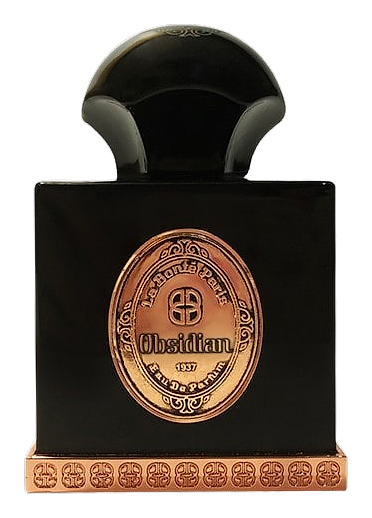
Obsidian landed in 2017 as part of La Bonté Paris's debut collection, the original wave that also introduced Rubis, Pearl, Heros, Essor, and Trone. Across that inaugural lineup, each fragrance takes its name from a material with a strong visual identity, from pearl's milky softness to the volcanic blackness that gives Obsidian its title. The composition opens with a bright, almost sunlit pairing of bergamot and tangerine, the kind of citrus chord that catches the light before settling into the skin. From there, the scent pulls downward into something heavier and more resinous, a base that reads dark, sticky, and slightly geological, the way a piece of cooled lava might feel smooth but unmistakably mineral.
What makes Obsidian structurally interesting is the collision between gourmand and oriental traditions. Cotton candy and caramel bring a confectionery familiarity, the kind of sweetness most people associate with lighter, more playful fragrances. Placing those notes on a foundation of labdanum, oud, and oakmoss is a deliberate genre-flip. The saffron and star anise in the opening further complicate things, adding a savory-spicy register that the candy base has to absorb. The result is a composition that reads as two different fragrances trying to share one bottle, and the tension between them is where the interest lives.
The evolution
The first thirty minutes are all sparkle and spice. Bergamot, orange, grapefruit, and tangerine hit bright, almost sharp, while saffron and star anise weave through underneath, pulling the citrus into something warmer and slightly bitter. The fruit fades fast. What's left behind feels like a different decision, jasmine and narcissus lending a waxy, indolic sweetness that bridges into the base without a clean handoff. Then the caramel arrives, and it doesn't creep. It announces itself, sticky and almost burnt, sitting on top of labdanum's resinous warmth and oud's leathery shadow. Cotton candy adds a spun-sugar haze that softens the oud's edges without domesticating it. Oakmoss grounds everything in something green and earthy, like the floor of a forest after rain. The drydown, what remains after four to six hours, is where Obsidian becomes itself. The citrus is gone. The florals are a memory. What stays is a low, dense warmth, caramelized amber, faint smoke, oud that's been polished smooth by everything that came before it.
Cultural impact
Obsidian sits within La Bonté Paris's debut collection of gemstone-named fragrances, a grouping that gathers Rubis, Pearl, Heros, Essor, Trone, and Obsidian under a single conceptual banner. That naming logic immediately sets a tone of material reference rather than abstract concept, treating each scent as an object with weight and color before it is smelled. Within the lineup, Obsidian takes the darkest position, a deliberate counterpoint to the lighter, more luminous entries around it.