The Story
Why it exists.
The beginning
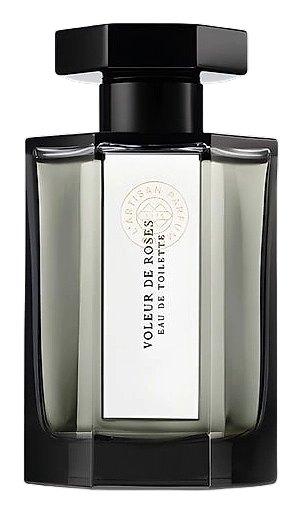
Voleur de Roses, the rose thief, arrived in 1993 from Michel Almairac, and the name is the concept. A rogue wind, the brand copy suggests, ripping petals and leaves from the bush. Not plucking. Not harvesting. Stealing. There's violence in that image, urgency. The rose doesn't give itself up willingly. Almairac built the fragrance around a single provocation: what if you took rose and removed everything soft about it? The sweetness, the petals, the associations with Valentine's Day and grandmothers and weddingcenterpieces. What remains when you strip the rose of its pleasantries is something darker, more honest, and considerably more interesting.
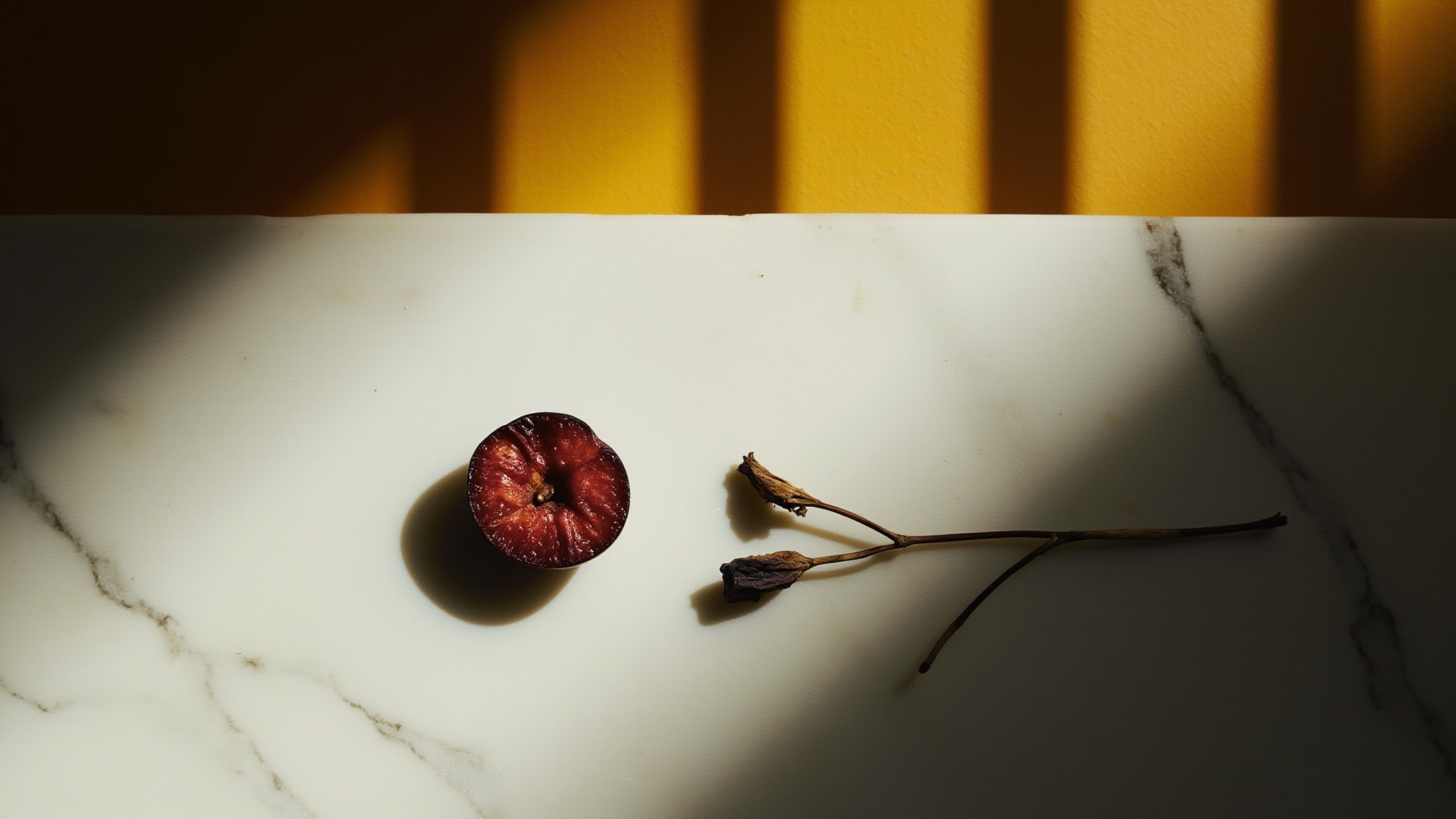
The patchouli is the point. Not as a base note, as the actual subject. Indian patchouli carries that characteristic dark, almost cocoa-like earthiness that cheap interpretations flattened into 1970s cliché. Here, it doesn't support the rose. It interrogates it. The damask rose underneath becomes a tell rather than a feature, present, but always in the shadow of something earthier and more insistent. Geranium bridges the transition between opening and heart, its green tartness keeping the plum from becoming too wine-like in the top. That's the craftsmanship: nothing sits where it shouldn't, but nothing announces itself either. The composition earns its 6-8 hour arc by never wasting a note.
The evolution
The opening arrives tart and green, geranium's sharpness cutting through plum's dark fruit. Bergamot barely registers, more of a breath than a presence. For the first five to fifteen minutes, there's a certain brightness that feels like it might go somewhere conventional. Then the patchouli arrives. Not gradually. It takes over. The rose doesn't disappear, it retreats, pulling inward, becoming a whispered warmth under layers of root-dark earth. This is the phase that defines the fragrance and it's the one that separates converts from the unconverted. The patchouli isn't polite. It isn't blended into submission. It owns the next few hours. The drydown is where the sandalwood and benzoin earn their place. A quiet warmth builds against the skin as the patchouli finally softens, not disappearing but settling. Musk stays close, almost intimate. The amber gives just enough sweetness to prevent bitterness. What lingers at hour six is a ghost of rose, faint, almost apologetic, over a base that smells like warm skin and damp earth. Not loud. Not trying to fill the room.
Cultural impact
Voleur de Roses occupies an unusual position among rose fragrances. Released in 1993, it arrived before the wave of dark, patchouli-forward roses that would later become a category staple. Where other houses were building opulent, sugary roses, Almairac stripped the rose of its pleasantries and handed the composition to patchouli. The result is a fragrance that rewards patience, its initial provocation gives way to something warmer, more intimate, and considerably more complex. It remains in the collection because it still works: a bridge fragrance for anyone who wants to explore beyond conventional florals without abandoning rose entirely.