The Story
Why it exists.
The beginning
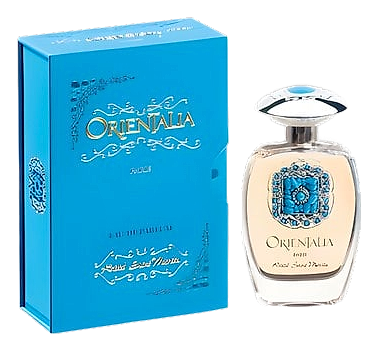
Orientalia draws its name and emotional core from a stone believed to carry protective power. The inspiration isn't abstract, it's a talisman, an object meant to bring happiness and guard against misfortune. The fragrance translates that intention into scent: something worn close to the body, present but not intrusive, offering its wearer a quiet sense of something working beneath the surface. Kristel Saint Martin built Orientalia as a floral-oriental composition that takes the genre's warmth and restraint it into something intimate rather than opulent. The house has always favored versatile compositions over single-note statements, and Orientalia fits that template, a fragrance that moves fluidly between occasions, carried rather than announced.
The structure is interesting because it inverts the typical oriental hierarchy. Usually, orientals lead with warmth and build toward depth. Orientalia reverses that: the opening is bright, almost juicy with peach and mandarin, while the oriental warmth of amber arrives mid-development and stays through the drydown. That sequencing matters. It means the fragrance feels fresh before it feels warm, accessible before it gets intimate. The jasmine and lily of the valley in the heart provide a floral bridge between those two phases, softening the transition without diluting either the brightness or the warmth.
The evolution
The opening hits bright and fruity, peach at the forefront, mandarin giving it lift, bergamot adding a clean citrus edge. As the citrus fades, the heart phase is where Orientalia earns its name: jasmine arrives with creaminess, plum adds a dark sweetness that deepens the fruit, and lily of the valley provides a green counterpoint that keeps everything from going flat. This middle phase gradually softens as the base begins to assert itself. The drydown is where vetiver does its work, earthy, slightly smoky, it grounds the sweetness of the amber and musk in something that reads as skin-warm rather than synthetic. The sillage moderates as it settles, becoming intimate rather than projecting, developing a close, personal presence that makes Orientalia memorable throughout the wearing period.
Cultural impact
The exact arrival of Orientalia remains uncertain, though it appeared sometime during the early 2000s, a decade when many fragrance releases leaned toward safe, mass-appealing compositions. This positioning as a floral-oriental with genuine warmth and depth offered something different, a fragrance that had personality without being difficult. Worn close, it functions as an olfactory mark of identity rather than a statement made to a room.