
The Story
Why it exists.
The beginning
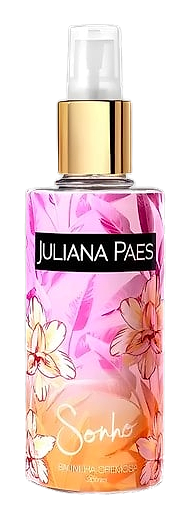
Juliana Paes Sonho arrived in the latter part of the 2010s as a Brazilian floral-fruity composed under the actress's own name, a release that slotted into a growing catalog of citrus brighteners and white-floral statements. The exact year varies between sources, with Fragrantica listing 2020 and Parfumo listing 2019, so the launch date sits somewhere in that narrow window depending on which record you consult. The name, Sonho, means dream in Portuguese, and the composition reads like the sensory translation of that word rather than a pitched concept. There is no single dramatic gesture in the formula, no overt hook designed to register across a crowded room. Instead the fragrance leans into atmosphere, building a soft, unhurried impression that unfolds gradually across the skin.
What makes Sonho structurally interesting is the way its citrus-floral-musk arc holds together without ever feeling top-heavy. The bergamot and neroli top notes carry a fair amount of weight here, partly because the neroli's green, slightly bitter edge has enough character to register on its own rather than vanishing behind the brighter fruit. Pair that with freesia, a note that adds a cool, watery quality to the heart, and the composition gains a freshness that keeps the florals from going syrupy or cloying.
The evolution
The first 15 minutes belong to citrus. Bergamot, grapefruit, and neroli arrive in something close to the order you'd catch them walking past a fruit stall on a warm afternoon, bright and slightly bitter, with that particular green pith of neroli sitting just underneath the brighter top notes. The combination gives the opening a layered quality; nothing collapses into a single citrus impression, and each note gets its moment before the next one shifts the balance. Around the 30-minute mark, the florals begin to assemble. Jasmine brings its indolic edge, freesia adds a cool, almost cucumber-like freshness, and peony rounds the heart into something without sharp corners. The floral stage has a translucent quality, more like light through a curtain than a bouquet pressed into the air. By the 2-hour mark, the composition has shifted toward base.
Cultural impact
Sonho sits within Juliana Paes's expanding catalog as a floral-fruity composed around bergamot, grapefruit, neroli, freesia, jasmine, peony, cedarwood, vanilla, and musk. Its name, Sonho, places it in a register that invites wearers to consider what the word 'dream' might smell like in fragrance form, a soft translation rather than an aggressive statement. The citrus-floral-musk structure offers something approachable, a composition that doesn't demand attention but rewards attention when it's given.
The House
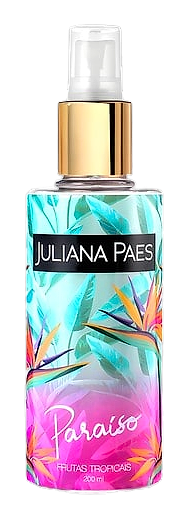
Juliana PaesJuliana Paes translates the energy of Brazil’s red‑carpet glamour into a line of fragrances that balance bright fruit notes with deeper, woody accents. Launched in 2012, the collection expands across more than a dozen scents, each bearing the actress’s personal imprint. The brand targets women who appreciate a scent that feels both familiar and adventurous, echoing the actress’s own mix of warmth and confidence. By 2020 the range includes Eau de Cologne, Eau de Parfum and limited‑edition releases, all positioned within Brazil’s growing niche‑fragrance market.
The Creator
Juliana PaesThe Juliana Paes fragrance house favors bold, sweet-floral oriental constructions aimed at a broad feminine audience. Compositions tend to open with bright fruity or citrus accords before unfolding into generous floral hearts, often built around rose, jasmine, and tropical whi…