
The Story
Why it exists.
The beginning
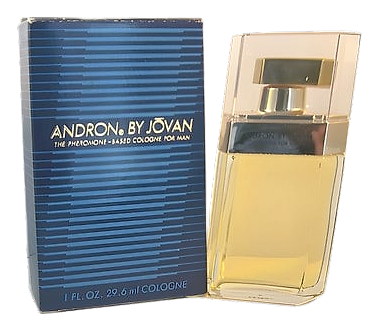
Andron for Men arrived in 1981 as part of Jovan's push into gender-specific offerings, a year after the brand's sculptural Sculptura and just before Andron for Women landed in 1982. The timing wasn't accidental. The early 1980s were peak era for interest in the chemistry of attraction, androstenol, a putative human pheromone, was generating serious scientific discussion. Jovan, which had built its reputation on wearable musk oils and everyday confidence, decided to experiment. Andron for Men took the familiar Jovan's musk template and pushed it somewhere more primal, adding animalic materials like civet and castoreum to a woody heart of sandalwood and patchouli. The result was a fragrance designed to smell like something your skin already knew.
What makes the Andron formula interesting isn't any single note, it's the combination of androstenol with traditional animalics. Castoreum (derived from beaver castor sacs) and civet (from the civet cat) were common in vintage perfumery but rare in affordable American fragrances by the 1980s. Most drugstore colognes stayed safe. Jovan went the other direction. The herbaceous-citrus opening is the composure. The woody-patchouli heart is the character. The animalic base is what you remember, and what lingers on fabric long after the occasion ends.
The evolution
The opening hits herbaceous first, rosemary or something close, brightened by citrus that doesn't linger. Within five minutes, the sandalwood and patchouli arrive and take over the conversation. This middle phase feels warm, slightly dusty, like the air in a wood-paneled room that gets used. The real story happens after hour two. That's when the musk-castoreum-civet triad emerges from underneath, transforming the composition into something more primal. On skin, the fragrance develops a skin-like quality, as if the synthetic musk and the animalic notes are converging on something the body recognizes. Projection moderates after the first hour. What remains is close, warm, and persistent. On fabric, expect the civet note to outlast everything else, detectable the next morning if the shirt makes it that long.
Cultural impact
Andron for Men occupies a specific moment in American fragrance history: the crossover era when scientific interest in pheromones met mainstream cologne culture. Released in 1981 alongside the broader Andron line, it represented one of the few mass-market attempts to incorporate animalic materials and pheromone-adjacent compounds at an affordable price point. Whether the androstenol actually worked was never the point, the point was the suggestion, the promise, the idea that this fragrance was doing something more than smelling good. Wearers who remember Andron tend to describe it in terms of effect rather than notes: it made an impression, it lingered, it stayed with you. In an era before niche fragrance democratized interesting materials, that was enough.