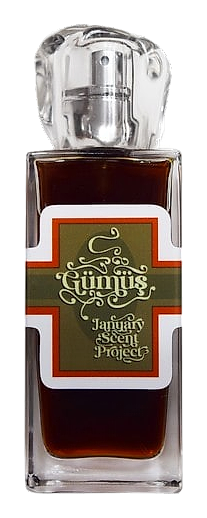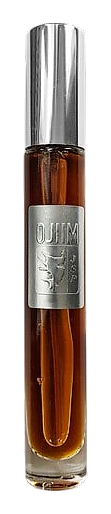

The Story
Why it exists.
The beginning
Dinudisit emerged from the collision of two territories, the saline and the terrestrial. The Instagram account describes it as 'a perfume about the sea; or I should say the sea and the land and how they interact.' That's not metaphor. It's structural. The fragrance was built on the tension between water-saturated air and the green, bitter plants that grow at the edge of it. Narcissus and rue push upward, maritime notes pull downward. Celery seed acts as the negotiator, bridging the aquatic heart and the herbal top. Biebel gave Dinudisit an anchor as its symbol. That says enough about where the weight lives.
What makes Dinudisit unusual is how it refuses both the easy aquatic and the straightforward green. Bergamot opens bright, rue cuts bitter, then the ocean accord arrives, not as a blue-water cliché but as something cooler, stranger. Celery seed is the left turn nobody sees coming: savory, mineral, almost vegetal in a way that reads as salt. The jasmine doesn't soften it into sweetness. It carries that same waxy, narcotic quality as the narcissus. The beeswax in the base is unexpected in an aquatic-leaning composition, it adds warmth, almost resinous weight, anchoring the marine notes to something terrestrial. Oakmoss and vetiver finish the job, turning the shoreline into soil.
The evolution
The bergamot arrives first, sharp and citrussy, but it doesn't linger. Rue pushes through almost immediately, bitter, herbal, green in a way that feels like crushed stems rather than crushed leaves. Ten minutes in, the narcissus blooms. Waxy and slightly narcotic, it's the first sign that this isn't a clean aquatic. The sea accord takes over the heart, but it's not a wave, it's the smell of wet stone at low tide. Celery seed threads through here, adding a savory mineral note that most people either love or find unsettling. Jasmine softens it just enough to keep it wearable. The drydown is where Dinudisit earns its hours. Beeswax and oakmoss settle into the skin, warm and mossy, with amber and vetiver adding depth that lasts well past the eight-hour mark. Patchouli keeps everything grounded. By the end, it smells like the shoreline after the tide's gone, salt and earth, still damp.
Cultural impact
Dinudisit occupies a specific corner of independent perfumery: the collector who treats scent as personal manifesto. It's not trying to be wearable in the safe sense. The celery seed, the rue, the oakmoss, these are not crowd-pleasing notes. For those who encounter it and connect, it becomes a reference point: proof that a fragrance can smell like a place without becoming a stereotype.
The House
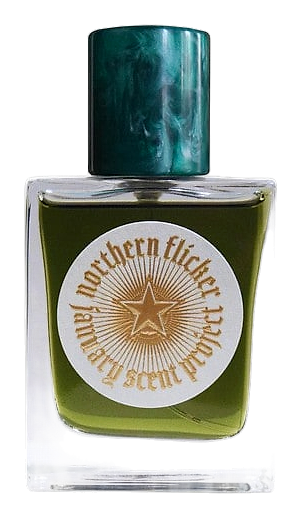
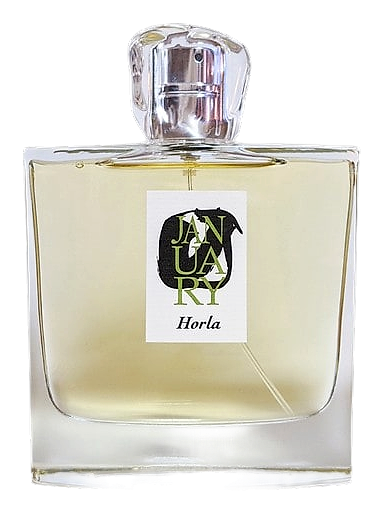
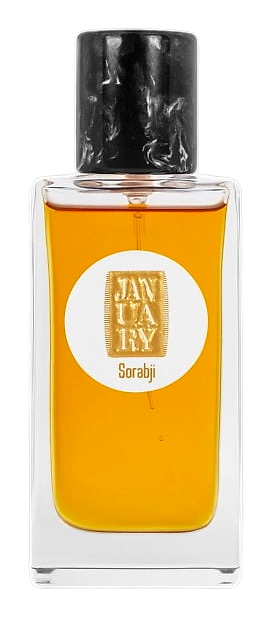
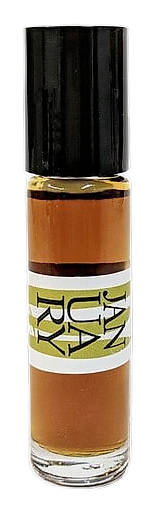
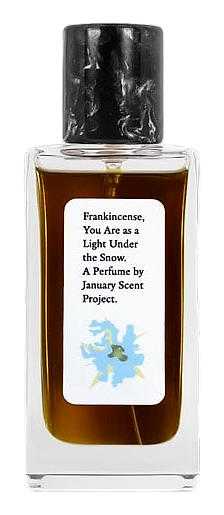
January Scent ProjectJanuary Scent Project is an independent fragrance house based in Pawtucket, Rhode Island. Founded in 2015 by multidisciplinary artist John Biebel, the label produces small‑batch artisan perfumes that blend visual art, music and design. The catalogue includes Smolderose (2017), Burvuvu (2018), Ojiim (2020) and Northern Flicker (2024). Each scent is presented as a personal statement rather than a commercial trend, and the brand also offers private scent development and consulting for collectors and creators who want a bespoke olfactory experience.
The Creator
John BiebelJohn favors a hands‑on approach, often mixing in small glass vials before scaling up. He leans on natural absolutes—smoked woods, resinous amber, wild herbs—while sprinkling in synthetics that add precision.