The Story
Why it exists.
The beginning
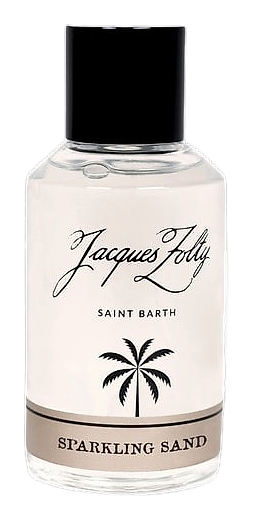
Sparkling Sand belongs to Jacques Zolty's L'Original collection, a line built around the idea of pauses, not journeys. The brief wasn't to capture Saint Barth as a destination. It was to translate the specific calm of warm sand between your fingers, that moment when the beach empties and the light turns gold. The name says sparkling, but the composition isn't about the water. It's about the granular surface itself, each particle catching a different angle of heat, still warm hours after the sun dropped. The perfumer worked with artemisia and incense to build something that opens green and smoky rather than bright and aquatic, then let chamomile and leather anchor it into territory that feels worn and personal. Apricot and iris add softness without sweetness. The result is a fragrance that feels like a specific afternoon, not a category.
The artemisia is the tell. In most beach-fragrance contexts, herbaceous notes get muted by salt and coconut, here they stay sharp and present through the opening, giving Sparkling Sand an unexpected coolness even as the base settles warm. Incense and leather create a kind of aromatic friction: the smoke lifts while the leather stays grounded. Chamomile doesn't smell like tea in this composition, it reads as a soft, almost powdery floral that bridges the herbal top and the warmer base. Apricot in the heart adds a faint fruitiness that keeps the leather from reading heavy, while iris contributes a powdery quality that extends the drydown.
The evolution
Artemisia arrives first, herbal, almost bitter, a greenness that doesn't apologize for itself. Thirty minutes in, incense and leather take over, and the composition shifts from sharp to warm. Chamomile and apricot emerge as softeners, rounding the edges without losing the character. The heart phase lasts through hour three, and it's where this fragrance earns its name: not bright, but warm and glittering, like sand at the magic hour. By hour five, the base notes arrive, vanilla, cedarwood, amber, musk, settling close to the skin. The drydown stays intimate, never projecting far, but it lingers. Eight to ten hours is the range, and on some skin types it quietly lasts into the next morning as a skin scent, barely there but impossible to fully wash away. The cedarwood keeps it from going flat; the musk keeps it human.
Cultural impact
Jacques Zolty established his house in Saint Barth in 2007, drawing from the island's natural palette of sun-warmed ingredients and coastal calm. The 2017 release of Sparkling Sand arrived during a period when niche perfumery shifted toward understated complexity and aromatic-forward compositions. The fragrance reflects a broader cultural movement toward scents that prioritize subtlety and personal presence over projection and sillage dominance. The use of artemisia and incense as primary notes signals an embrace of bitter-herbal elements that challenge conventional sweetness, resonating with wearers who value sophistication over spectacle.