The Story
Why it exists.
The beginning
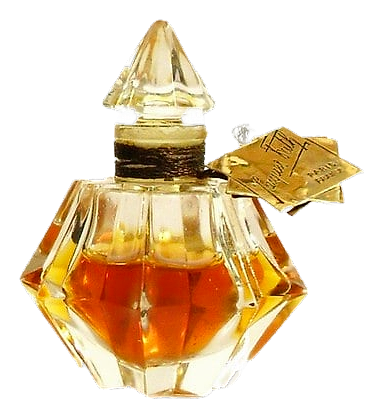
Fath de Fath arrived in 1953, a self-titled declaration from a house that had already made its name in Parisian couture. Created by perfumer Jacques Bersia, the fragrance carries the designer's own name, an unmistakable statement of personal signature. The name says it all: Fath de Fath is Jacques Fath, doubled, translated into a form you could wear against your skin rather than draped across your shoulders. What began as fabric and thread now exists as something you can carry with you, a second skin of a different kind. The couturier's world, rendered in alcohol and oil, made its way to the vanity tables of those who understood what this name meant in the context of postwar Paris.
The aldehydic floral oriental classification places it squarely in mid-century perfumery. Powder, iris and aldehydes work together to create something with a particular character, a balance between brightness and depth that defines this era's approach to florals. It's a fragrance that asks something of its wearer, a certain familiarity with how these materials behave, a patience with the unfolding. The aldehydes give it lift, the iris gives it weight, and together they create something that reads as both classic and specific to its moment in time.
The evolution
The opening arrives bright, almost sparkling, aldehydes doing what aldehydes do, lifting everything above the skin. The florals push through in time: iris and something warmer underneath, a supporting note that gives the powder a place to build. As the top notes recede, the heart reveals its true character, powder building quietly, settling into a softness that feels natural rather than applied. The base develops gradually, wood arriving as the florals fade, providing structure that keeps the composition from dissolving entirely. What lingers is that powder accord, fading slowly, becoming fainter as hours pass, a memory of the initial spray rather than the spray itself.
Cultural impact
Fath de Fath belongs to the aldehydic florals of its era, fragrances that defined what classic perfumery could be. The structure speaks to a time when these compositions were built to last, to announce themselves, to make their presence felt in a room. It represents a particular approach to scent that has since become rarer, harder to find, something sought out by those who know what they're looking for. The house appears to have discontinued this fragrance, which means anyone wearing it today is wearing something that has survived, a piece of its time that still holds its own.