The Story
Why it exists.
The beginning
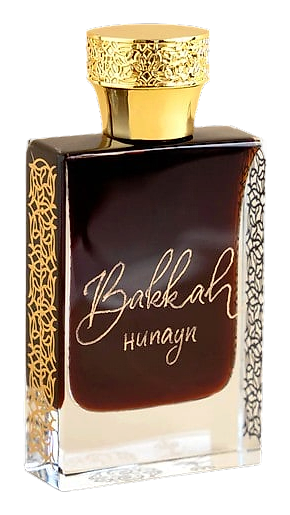
Bakkah takes its name from the ancient word for Mecca, the city at the center of the Islamic world where earthly and divine meet. According to Hunayn, this composition traces back to a commission linked to His Majesty Sultan Qaboos of Oman, who entrusted the most skilled distillers and artisans of his time to source the finest available oud, rose, frankincense, musk, and ambergris to recreate the sacred scent once used on the Kaaba. The 30 years this perfume has patiently matured gives it a depth and continuity that speaks to something older than trend, a lineage of intention. Perfumer Adill Ali translated this carefully aged composition into the 2024 release worn today, working from a formula shaped by decades of slow development.
The materials earn the weight here. Omani frankincense brings a resinous brightness that no synthetic can fake, a clean lift that glows against the darker notes surrounding it. Taif rose otto, one of the most labor-intensive essential oils on earth, carries a honeyed darkness that anchors the composition's floral heart. Assam oud adds the barnyard, almost-leather depth that distinguishes properly aged agarwood, harvested from ancient trees and carrying the weight of their growth in every molecule.
The evolution
The opening doesn't ask for attention. It assumes it. Omani frankincense arrives already lit, a bright and mildly prickly resin note that smells like the air inside a stone-walled sanctuary, cold at first, then slowly warming as the minutes pass. The Taif rose surfaces as the resin begins to settle, and this is where Bakkah reveals its character. This is darker than most roses you've encountered, jammy and laced with something almost fermented, like rose petals steeped in honey and left near a flame. The transition into base happens gradually, and this is where the composition earns its reputation. The Assam oud isn't polite. It carries that barnyard, slightly fecal edge that only properly aged oud has, balanced against Kashmiri deer musk, which adds warmth and intimacy to the composition.
Cultural impact
Within niche fragrance circles, Bakkah draws comparison to established spray ghaliyas from houses like ASO, Faizal, and Elkhaldi, names that resonate with collectors who value traditional Arabian perfumery in wearable form. The reception in community spaces has positioned it as a serious entry in the contemporary Arabic perfume conversation, with reviewers consistently reaching for words like meditative, grounding, and contemplative when describing the experience of wearing it. One community member called it 'an exceptional spray ghaliyah,' a phrase that captures how wearers tend to respond to the composition.