The Story
Why it exists.
The beginning
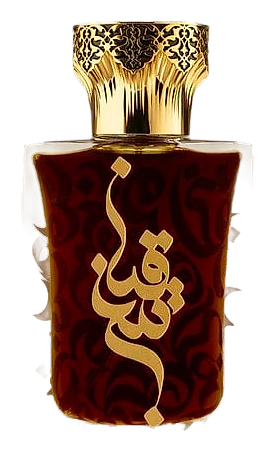
Tabac Qinan arrived as part of Hunayn's collection, a fragrance built around an idea rather than an effect. The name references the kinam woods, a quiet, grounding presence that anchors the entire composition. Perfumer Adill Ali approached tobacco with a specific question: what if tobacco meant warmth, depth, and atmosphere instead of smoke? The result is layered, warm, and quietly bold. The fragrance unfolds in stages, each phase revealing new dimensions without ever becoming heavy-handed. It's a composition designed to feel complete, with every element serving a purpose.
The use of kinam, a kyara-type agarwood, is what sets this apart. It doesn't shout. It doesn't demand attention. It sits beneath everything else like a second heartbeat, adding gravity without weight. Combined with three distinct rose varieties, Bulgarian, Taif, and Malaysian, the tobacco structure avoids being heavy. Instead, there's silk accord, a touch of raspberry, and a saffron-spice bridge that keeps the composition breathing. The roses keep everything from becoming dense, their interplay creating space within the layers.
The evolution
The opening hits bright and textured: tangerine zest, neroli blossom, juniper berry, black pepper. There's a clean vitality here, a textured liveliness that establishes the fragrance's tone. Then, the handoff. Spices and florals take over: saffron warmth, nutmeg's soft heat, the triple rose accord doing the real work of keeping things from becoming dense or overwhelming. Bulgarian, Taif, and Malaysian roses each bring something distinct, their interplay creating breathing room. Silk accord weaves through like a whisper, adding a tactile quality that makes the fragrance feel almost physical. The tobacco itself builds slowly, layered rather than linear, arriving in stages rather than all at once. Virginian tobacco, dhokha, and tobacco absolute combine into something greater than their parts. By drydown, the roses have softened to skin-warm whispers.
Cultural impact
The release of Tabac Qinan marks an expansion into tobacco-focused compositions, an area where regional perfumery traditions have deep roots but few contemporary interpretations. The use of kinam, a kyara-type agarwood, is notable. It's a material associated with Japanese incense traditions, prized for its ability to add gravity without weight. The fragrance brings together disparate influences into a single, coherent vision. Tobacco serves as the unifying thread, approached not as a bold statement but as a quiet foundation. The rose varieties and spice accords provide breathing room, preventing the composition from becoming heavy.