The Story
Why it exists.
The beginning
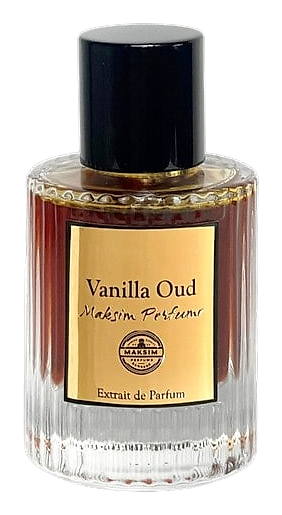
Vanilla Oud began as a question: what if oud didn't have to announce itself? Maksim Bortnikoff had worked with the material long enough to know its reputation, heavy, animalic, divisive. The brief here was different. Soften the edges. Let the warmth lead. Three natural vanillas were chosen deliberately, Papua New Guinea, Madagascar, and red vanilla, each aged differently, each bringing something distinct to the composition rather than amplifying a single note into sweetness. Cambodian and Thai oud followed, selected for their smoother, more approachable facets rather than the harshness that gives oud its polarizing reputation. Birch tar was added in just enough quantity to give the base a faint smoky undertone without tipping into leather or campfire territory. The result is exactly what the brand described: cozy, elegant, and lasting.
What makes Vanilla Oud distinctive is restraint applied to rich materials. Most vanilla-oud fragrances lean one direction or the other, either the oud dominates and the vanilla becomes an afterthought, or the vanilla overwhelms and the oud exists only as a marketing label. Here, neither wins. The three vanillas don't stack into a wall of sweetness; they layer, each contributing its own frequency. One brings cream, another warmth, the third a faint fruitiness that keeps the composition honest. The oud follows the same principle, Cambodian and Thai specimens chosen specifically for their gentler expressions, blended to create depth without harshness.
The evolution
The opening arrives bright. Black pepper and Madagascan pink pepper arrive first, two sources of the same sensation, one sharp and immediate, the other rounder and slightly sweeter. Italian bergamot cuts through with a brief citrus clarity before the spice settles into the skin. Thirty minutes in, the florals begin their transition. Jasmine sambac emerges first, heady and slightly indolic in the way quality jasmine often behaves, before apricot arrives and shifts the character toward something almost jam-like. At the same time, the three vanillas start announcing themselves. The warmth builds gradually rather than announcing itself. Two hours in, the oud becomes detectable, not as a dominant force but as a soft, slightly smoky undercurrent that begins pulling the florals and fruit toward the base. The jasmine fades. The apricot softens into the vanilla. The oud remains, and now it has company. Benzoin and Peru balsam arrive to build the resinous warmth, their sweetness meeting the vanilla rather than competing with it.
Cultural impact
Vanilla Oud launched in 2025 as part of a niche fragrance landscape where oud has become both a statement material and a polarizing one. The house's philosophy, embrace materials that require adjustment, build for collectors rather than crowds, places this composition firmly in the territory of wearers who already know what they want. It's not trying to convert anyone. The three-vanilla approach adds something genuinely unusual to the sweet-oud conversation, which has grown crowded with variations on a single idea. Those already engaged with the genre will find something worth examining here.