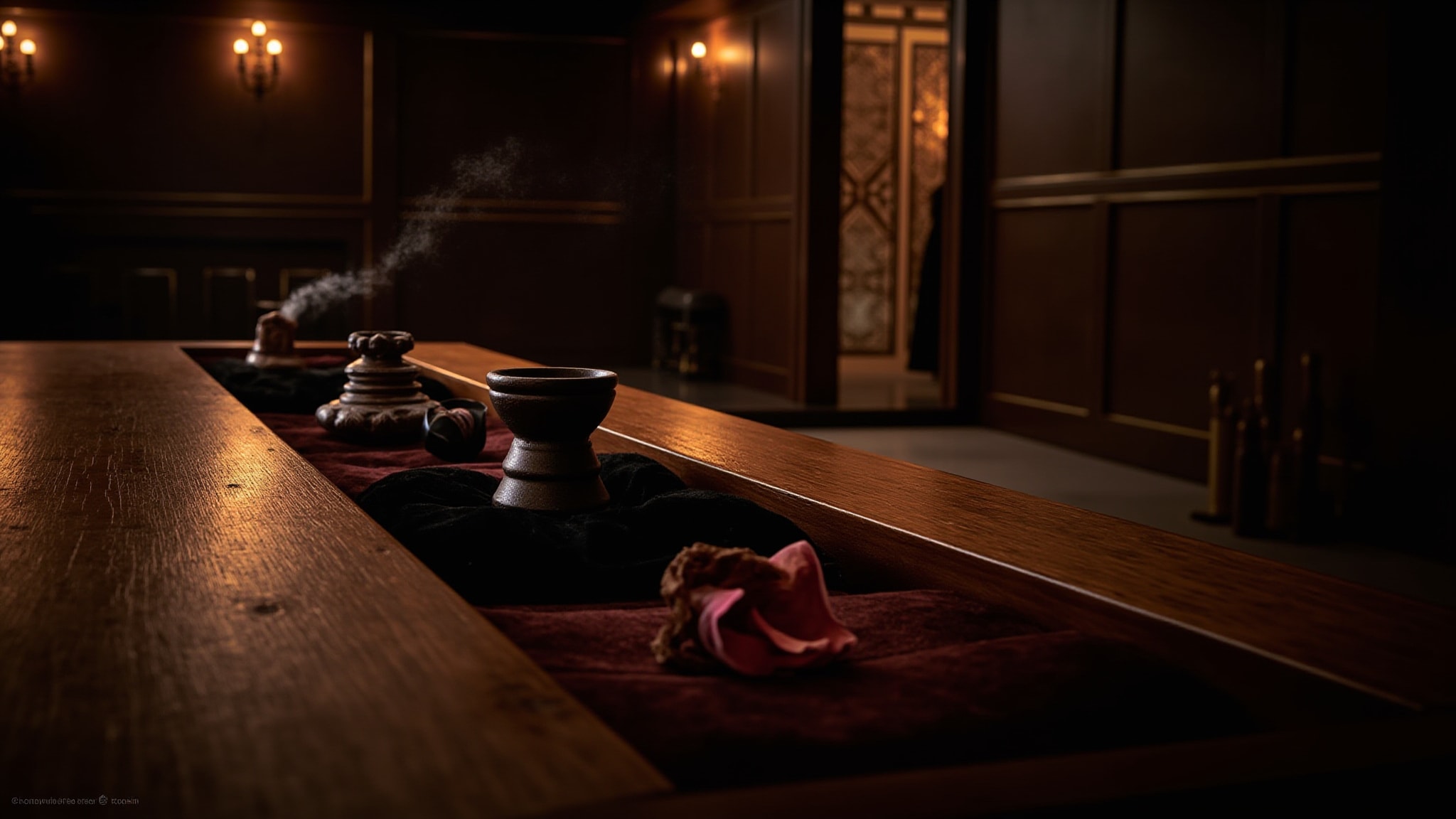
The Story
Why it exists.
The beginning
Adill Ali designed Kyara no Bara as an act of intentional refusal. Rather than building a fragrance in the conventional manner with opening, heart, and drydown, Ali chose to begin in the middle. The name references the legendary wild agarwood once reserved for imperial courts, and the perfume translates that history into a modern context by pairing oud with Japanese rose. The fragrance launches directly into its heart, asking the wearer to accept the full composition without preparation. This approach reflects Ali's interest in challenging perfume conventions and creating scents that demand attention rather than invite it gradually.
The philosophy behind Kyara no Bara treats the heart as the only relevant phase of wear. By omitting opening and drydown stages, the fragrance achieves a singular focus on the central aromatic experience. Rose serves as the foundation because of its cultural significance across both Western and Eastern traditions. Frankincense and oud were chosen for their historical importance in sacred contexts, creating a fragrance that carries weight beyond its aromatic qualities. Ambergris provides warmth without sweetness, while myrtle and honeysuckle balance the heavier elements with subtlety.
The evolution
Kyara no Bara begins with rose in full bloom and myrtle providing green clarity from the first moment. Tangerine adds brief citrus brightness before frankincense emerges to create a sacred incense quality. Oud provides smoky depth and ambergris contributes animal warmth as the fragrance establishes its character. Honeysuckle weaves quietly through the composition, offering floral softness against the resinous and woody elements. The structure remains constant throughout wear, with all notes present from beginning to end. The result is a fragrance that arrives fully formed, remaining consistent from first spray to final drydown without distinct phase transitions.
Cultural impact
Since its 2025 debut, Kyara no Bara has been praised for its disciplined minimalism, earning a place in niche‑perfume round‑ups that celebrate incense‑forward compositions. Collectors note its limited‑run status within The Finite series, making it a coveted piece for those who value heritage‑inspired storytelling. Reviewers often compare its rose‑oud balance to the house’s earlier Al Multazam, but highlight the added freshness of Japanese rose as a distinguishing twist.